● Mumbai airport desk open 24×7 WhatsApp Us Telegram ↓ Company Profile (PDF)
₹ RATESUSD —EUR —CNY —GBP —AED —
FREE DOWNLOADS · IATA DGR · UN MODEL REGULATIONS

Dangerous goods labels, ready to print.

51 hazard labels, handling labels and marks for air and sea shipments, from lithium battery marks and Cargo Aircraft Only to perishable, live animal and Time & Temperature Sensitive labels. Each one comes as an A4 PDF at actual size, a 300 dpi PNG and an SVG for your label printer.
BATTERY MARKS · 10

Lithium & sodium-ion battery marks

The marks we print most: every mobile phone shipment we fly carries one. All versions follow the current design with no telephone number, which becomes mandatory on 1 January 2027.
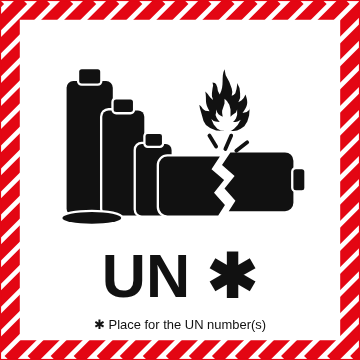
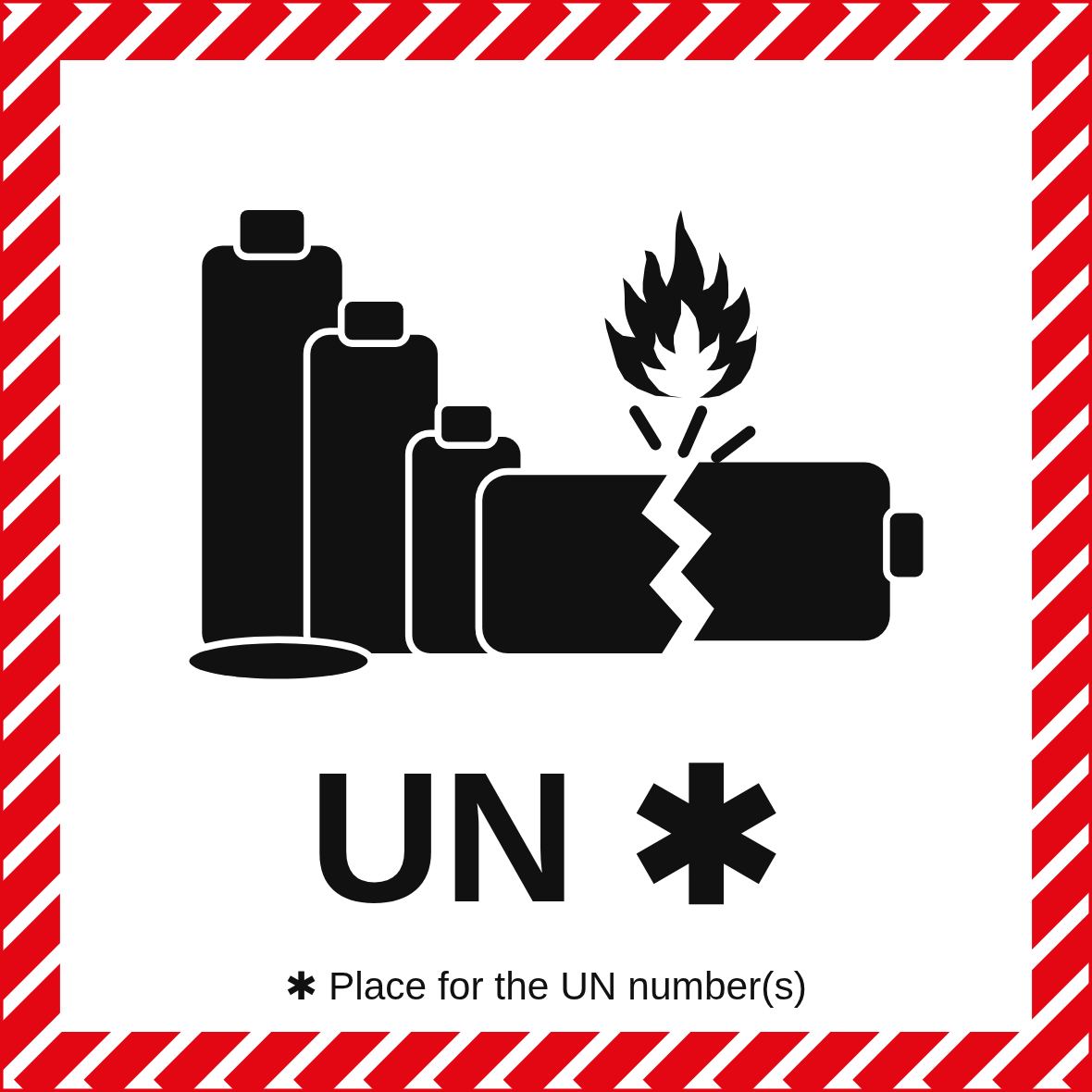
Battery mark – blank (write in UN number)
Battery mark – blank (write in UN number) Min. 100 × 100 mm Current design with no telephone number (mandatory from 1 January 2027).
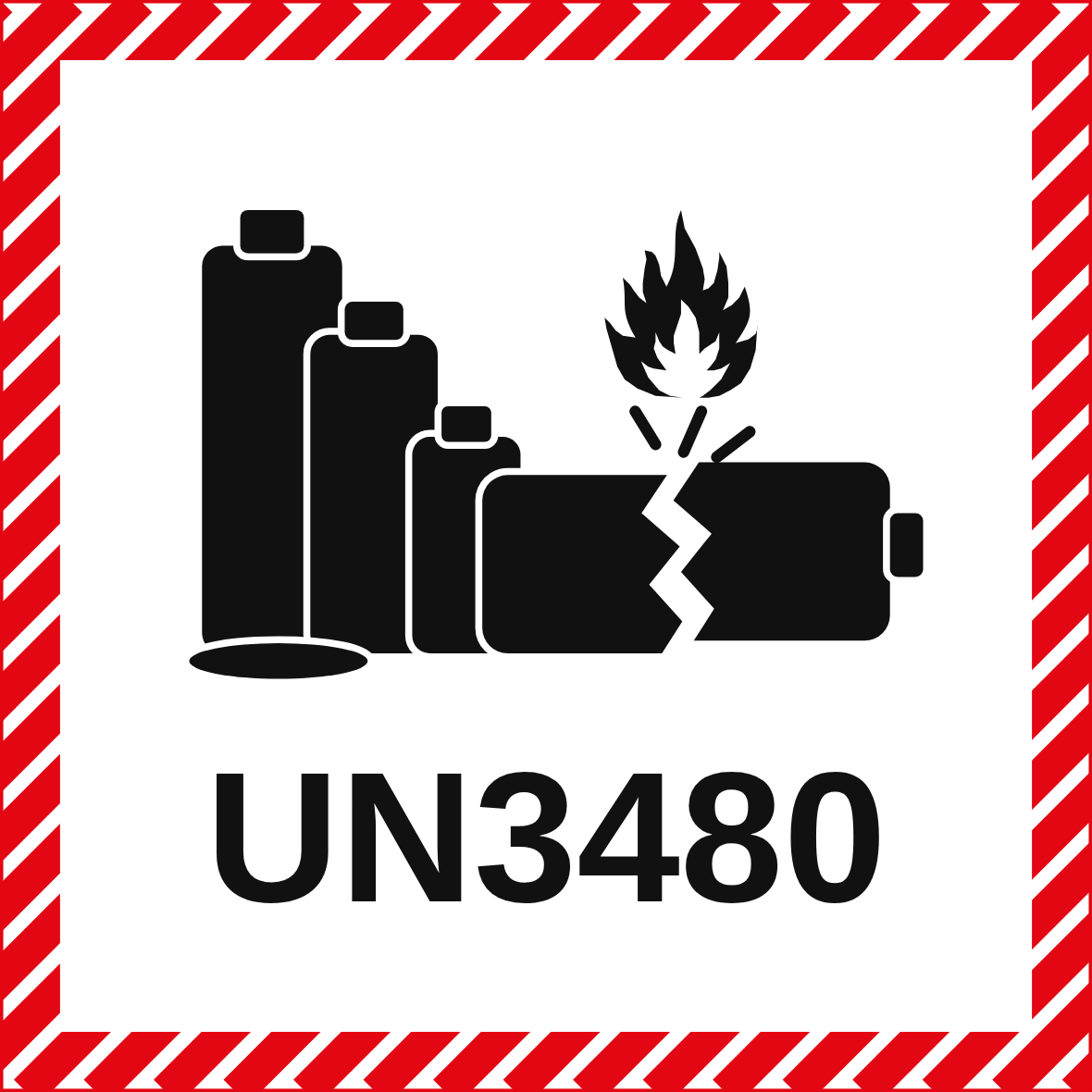
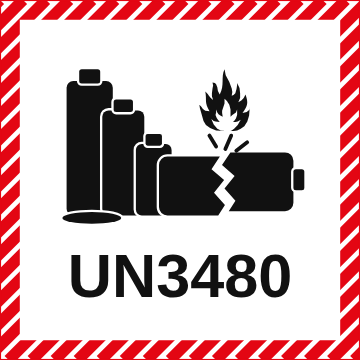
Battery mark – UN3480
Battery mark – UN3480 Min. 100 × 100 mm Lithium-ion batteries, packed alone (PI 965).
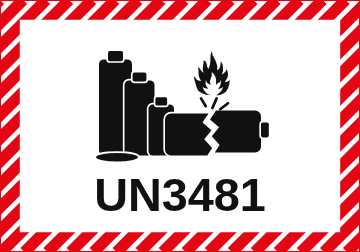
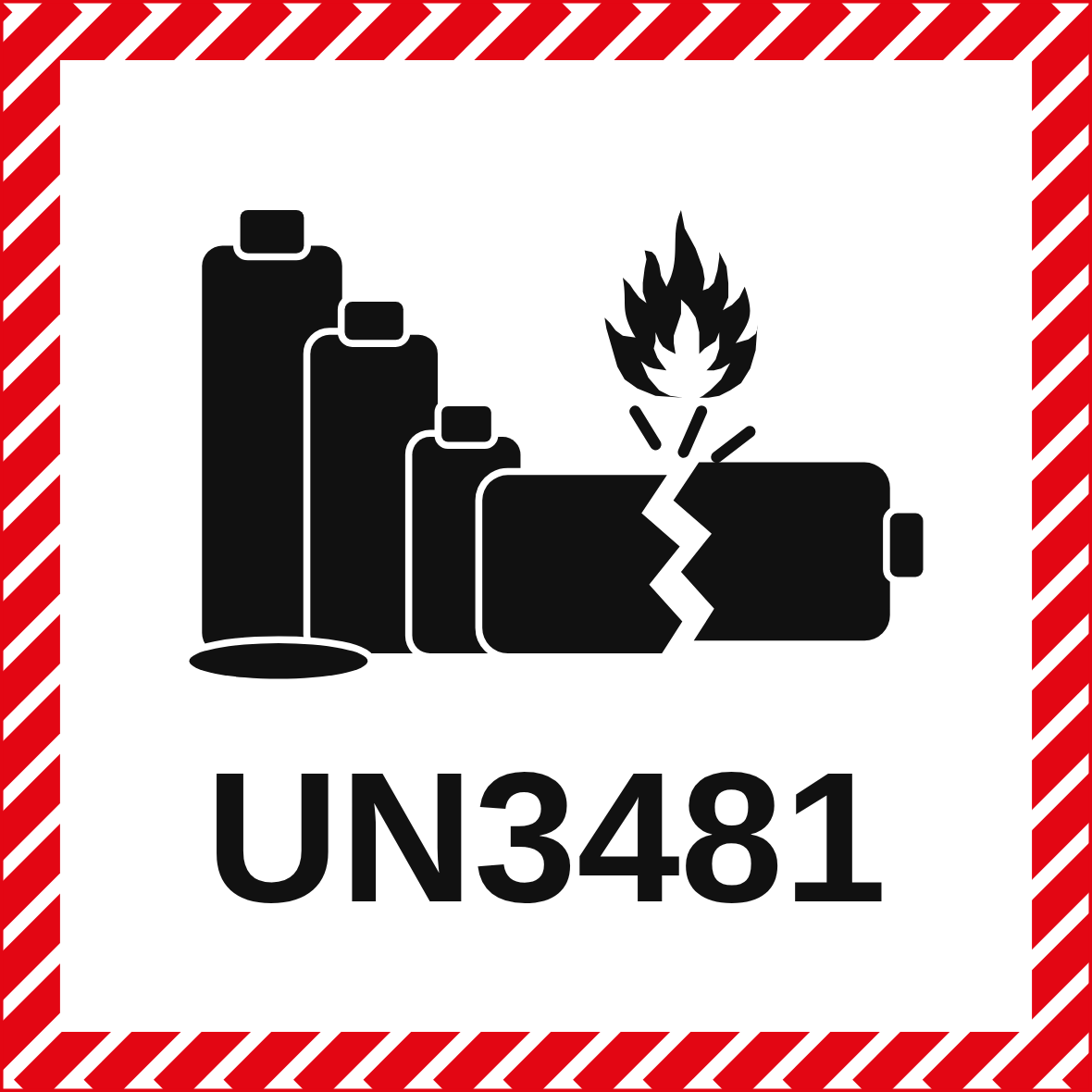
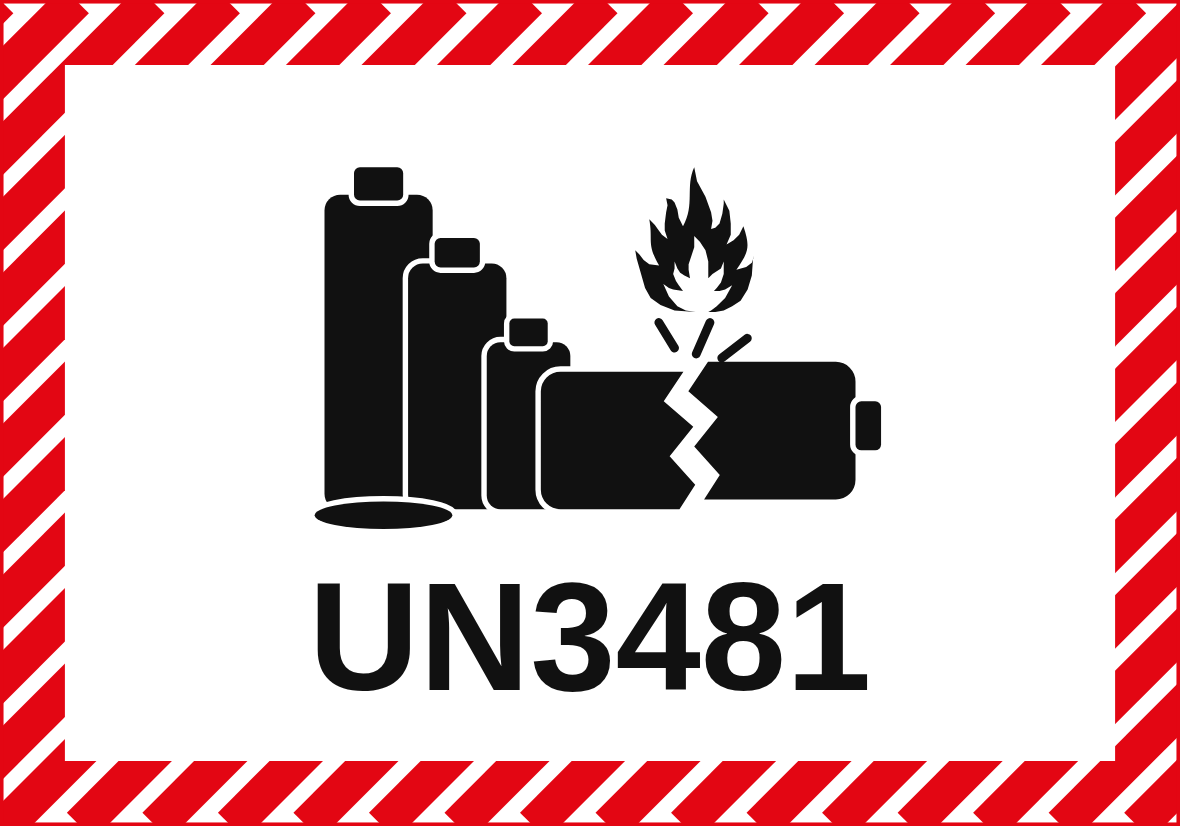
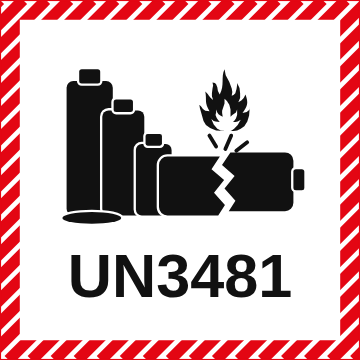
Battery mark – UN3481
Battery mark – UN3481 Min. 100 × 100 mm Lithium-ion batteries packed with or contained in equipment (PI 966 / 967), e.g. mobile phones.
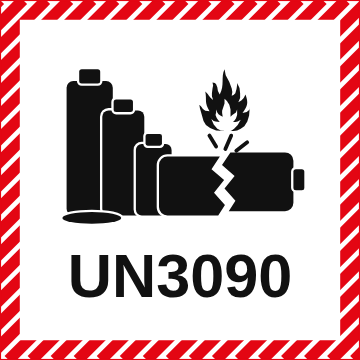
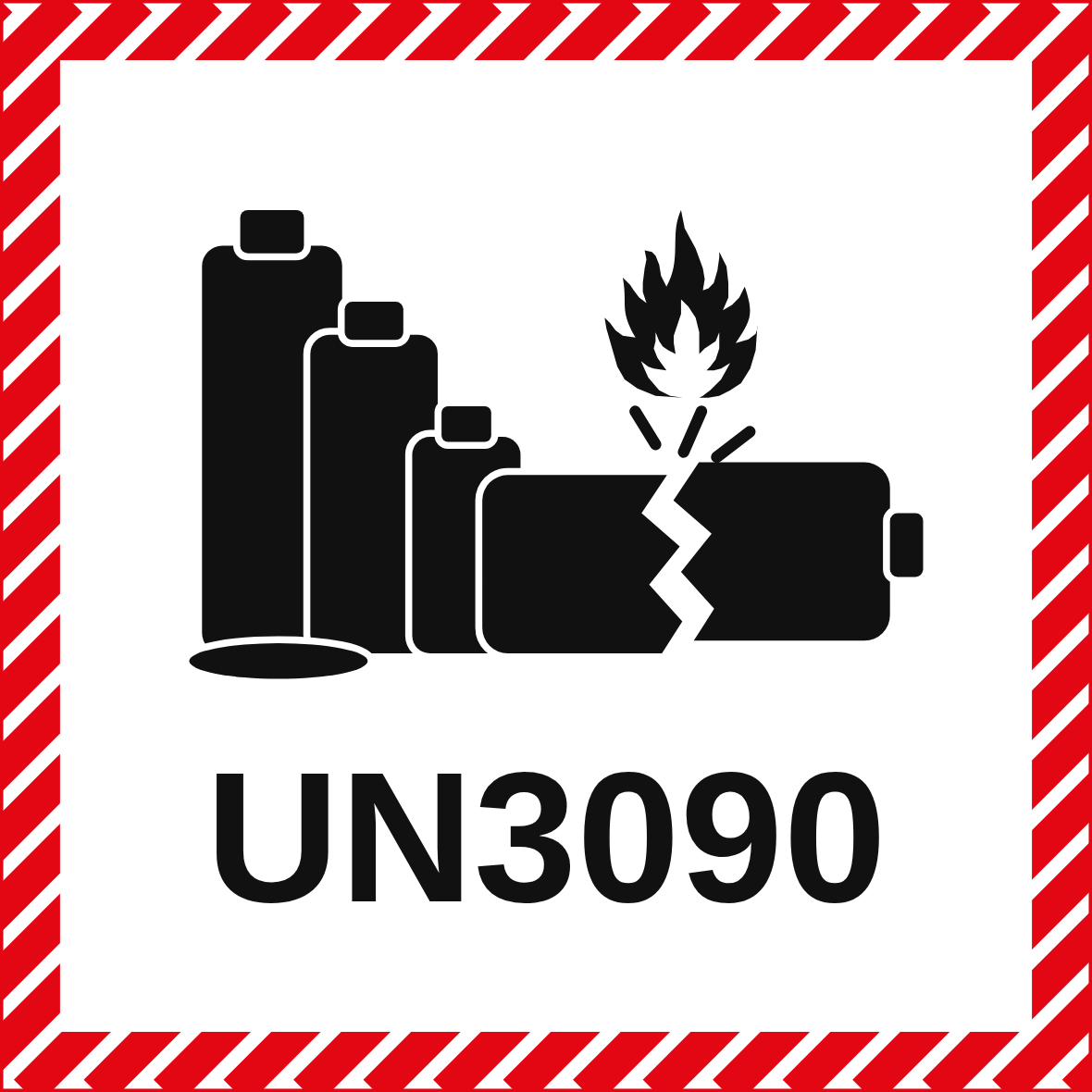
Battery mark – UN3090
Battery mark – UN3090 Min. 100 × 100 mm Lithium metal batteries, packed alone (PI 968).
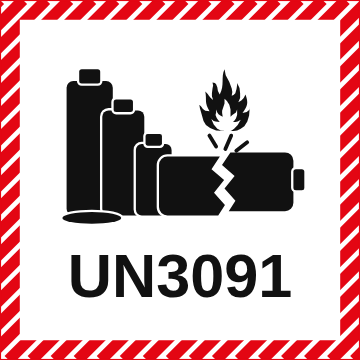
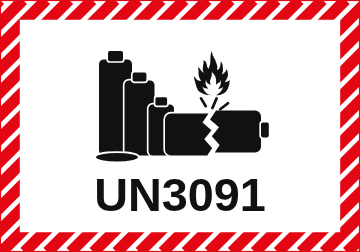
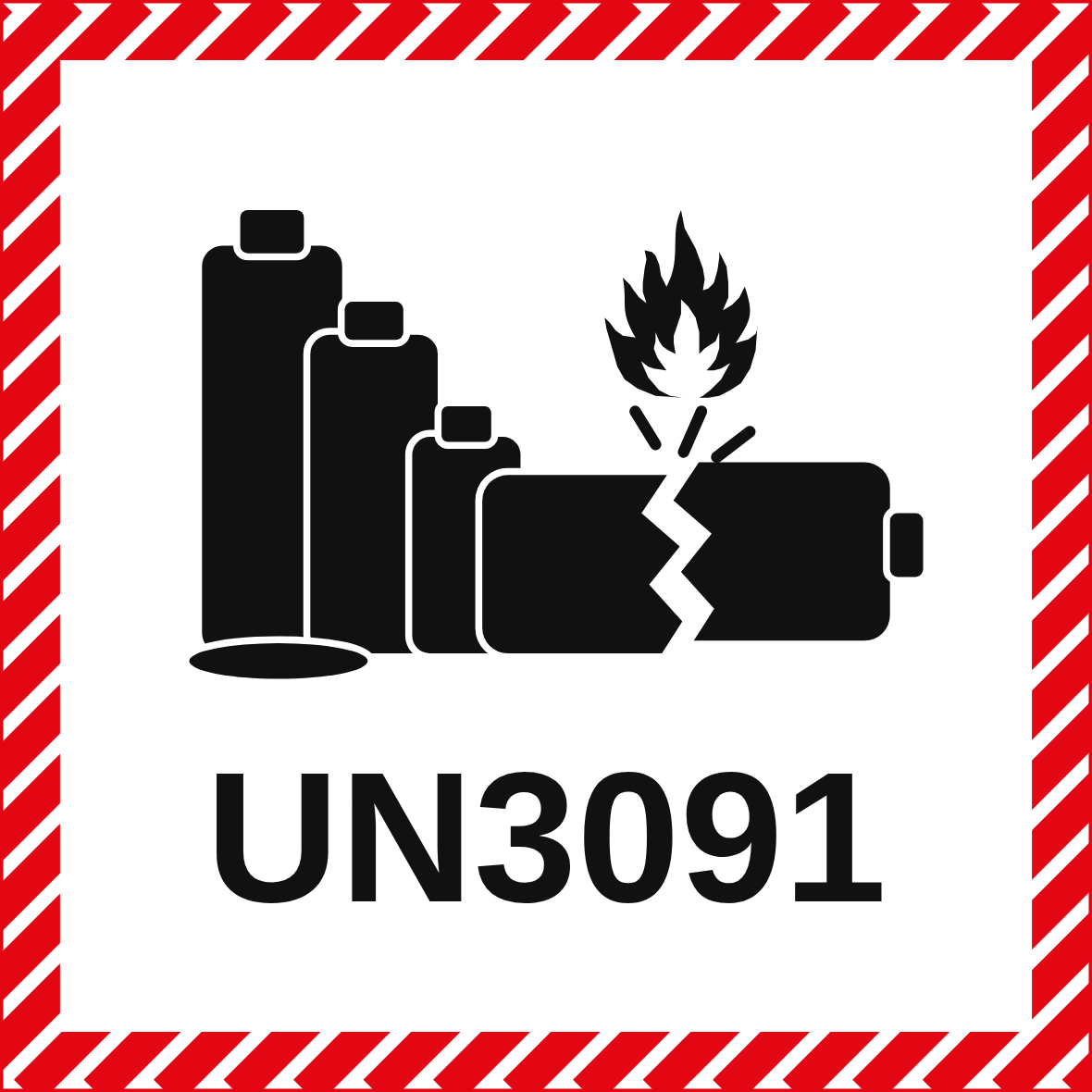
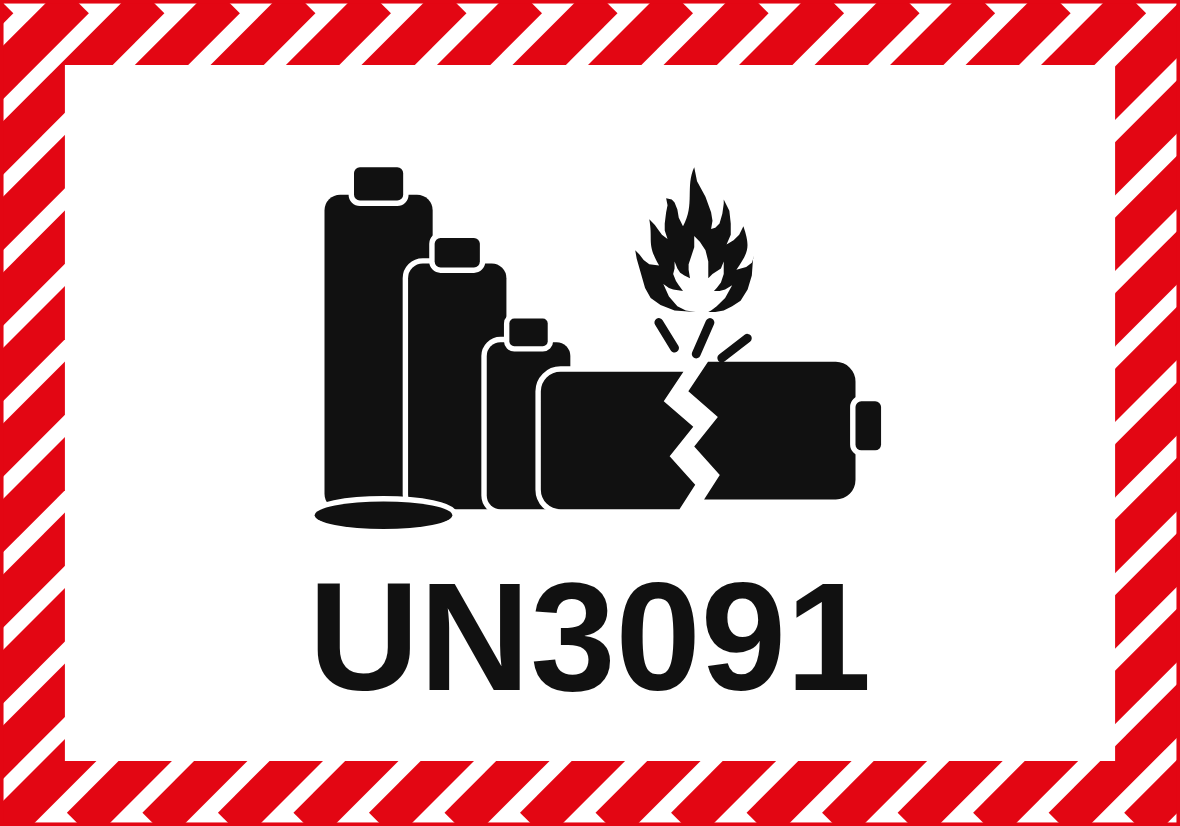
Battery mark – UN3091
Battery mark – UN3091 Min. 100 × 100 mm Lithium metal batteries packed with or contained in equipment (PI 969 / 970).
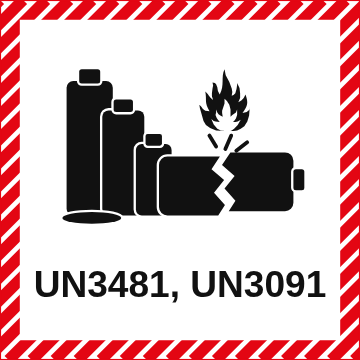
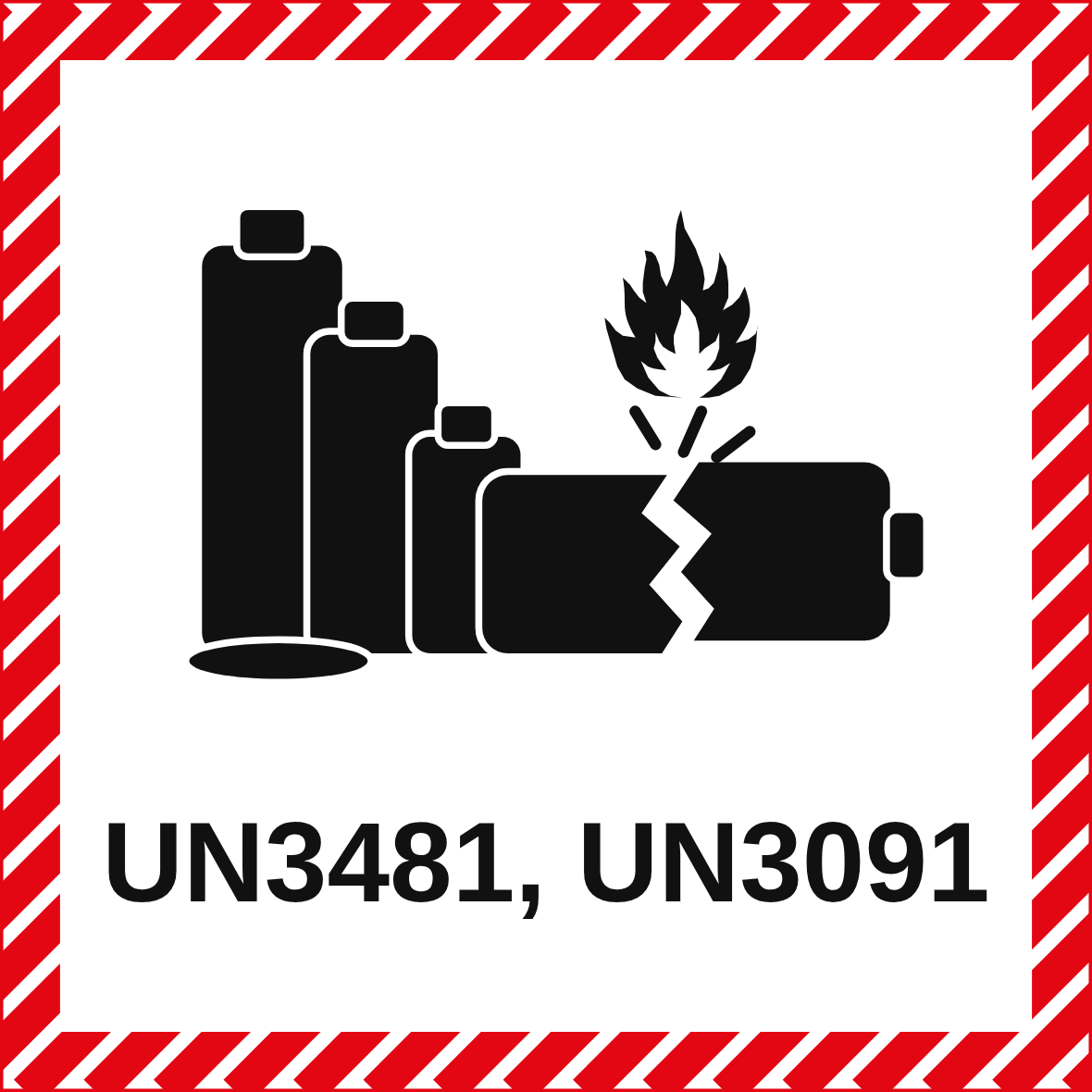
Battery mark – UN3481, UN3091
Battery mark – UN3481, UN3091 Min. 100 × 100 mm Package with both lithium-ion and lithium metal batteries in equipment.
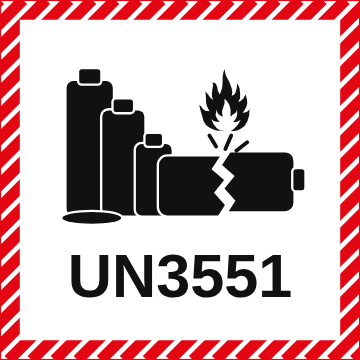
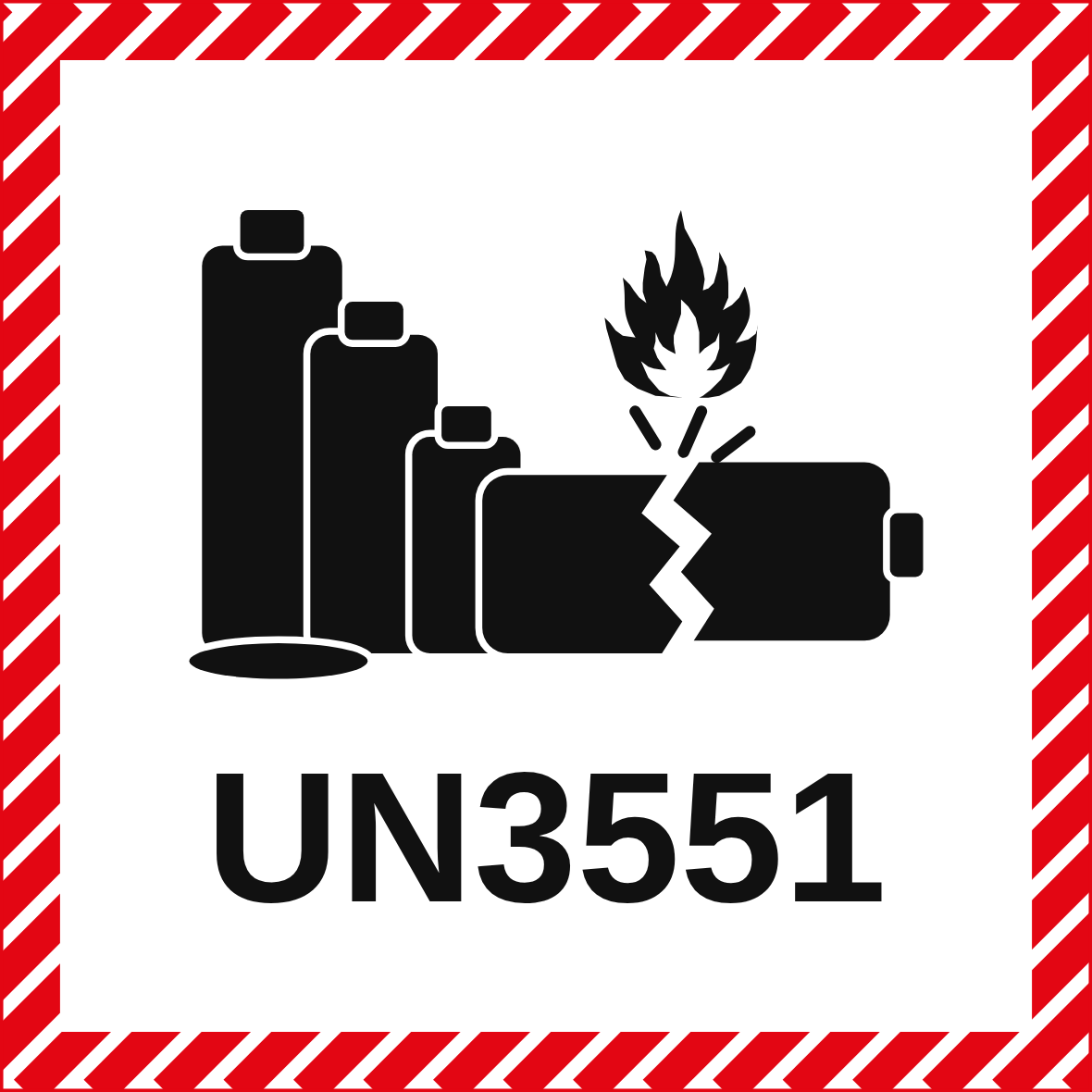
Battery mark – UN3551
Battery mark – UN3551 Min. 100 × 100 mm Sodium-ion batteries.
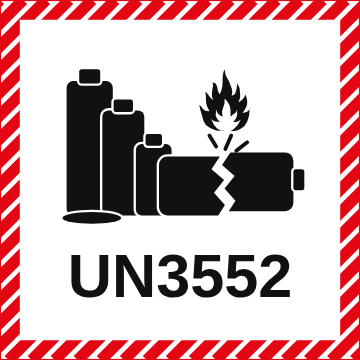
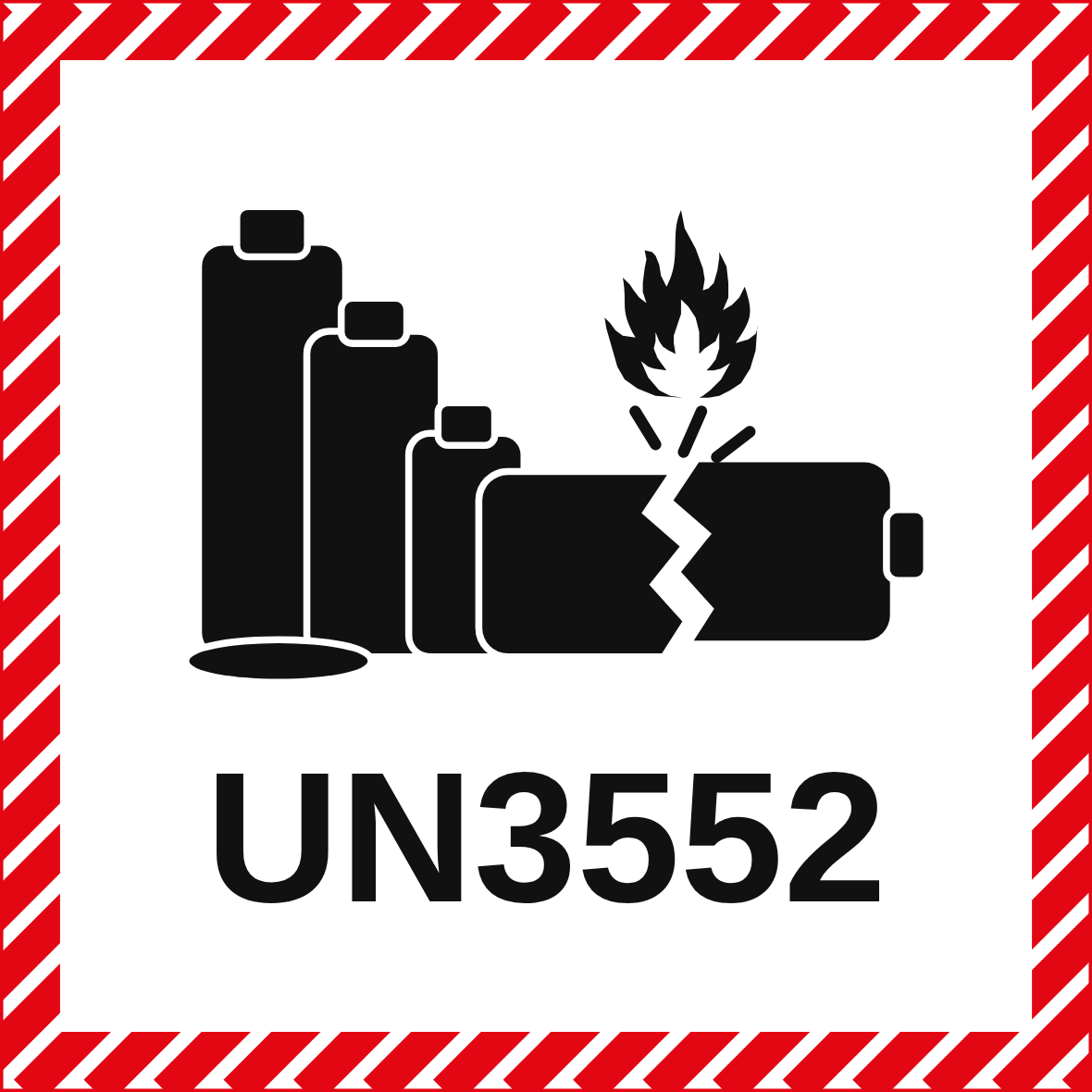
Battery mark – UN3552
Battery mark – UN3552 Min. 100 × 100 mm Sodium-ion batteries packed with or contained in equipment.
Battery mark – UN3481 (small package, 100 × 70)
Battery mark – UN3481 (small package, 100 × 70) Min. 100 × 70 mm (small packages) Reduced size for packages too small for 100 × 100 mm.
Battery mark – UN3091 (small package, 100 × 70)
Battery mark – UN3091 (small package, 100 × 70) Min. 100 × 70 mm (small packages) Reduced size for packages too small for 100 × 100 mm.
HAZARD LABELS · 23

Hazard class labels, 1 to 9

One label per hazard class or division, at least 100 × 100 mm. Text is optional on most labels, but the class number at the bottom corner is required.
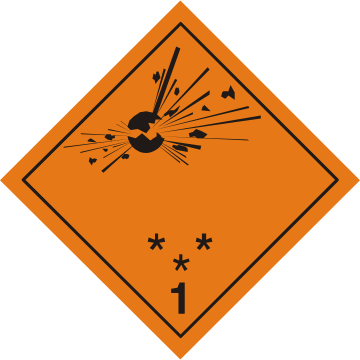
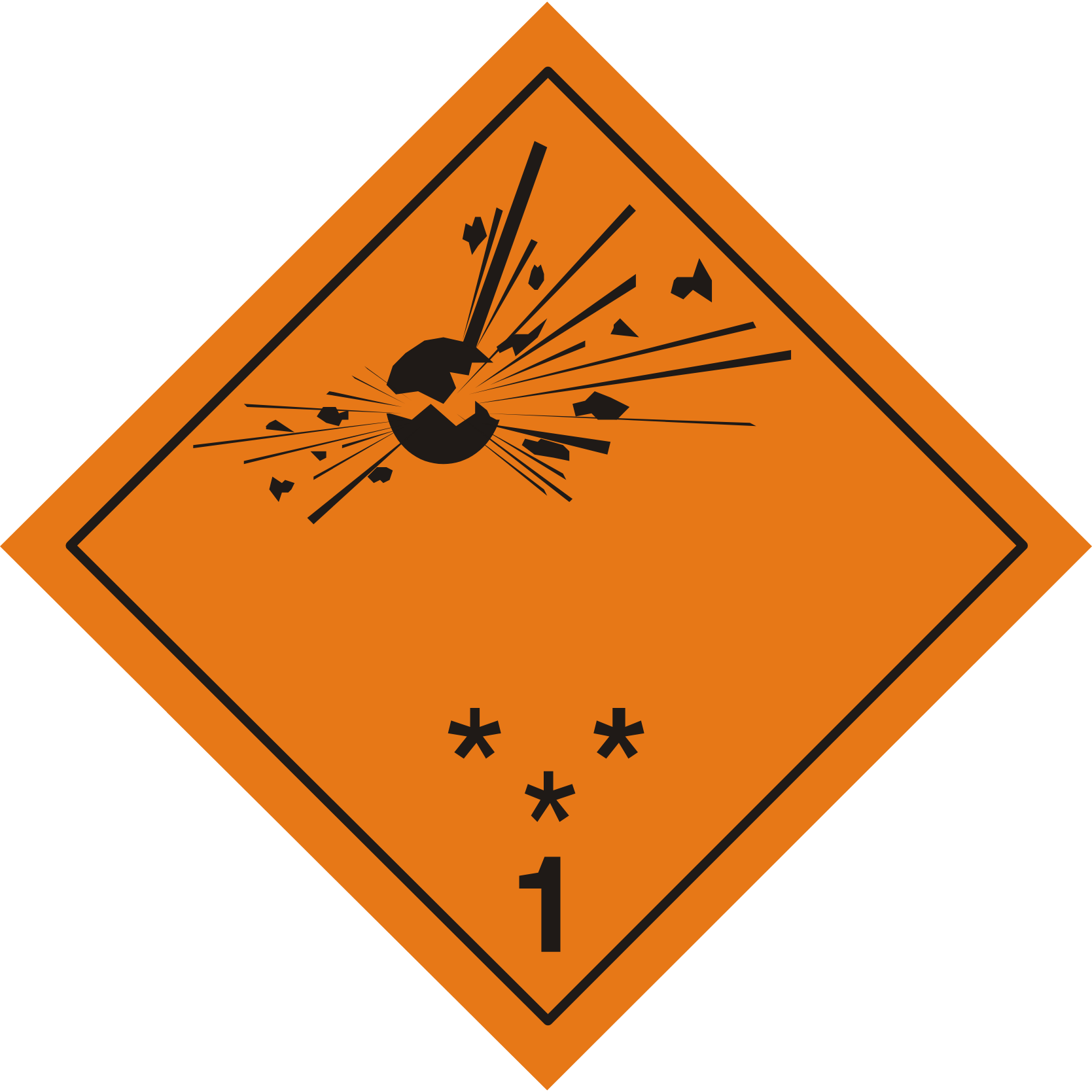
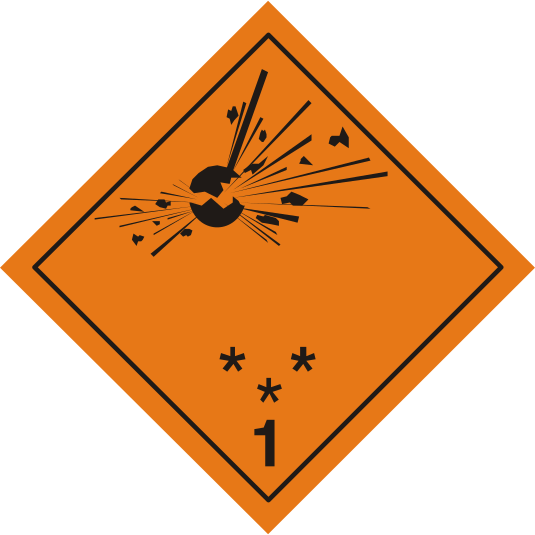
Class 1 – Explosives (1.1, 1.2, 1.3)
Class 1 – Explosives (1.1, 1.2, 1.3) Min. 100 × 100 mm (square set at 45°) Write the division (**) and compatibility group (*) in the spaces.
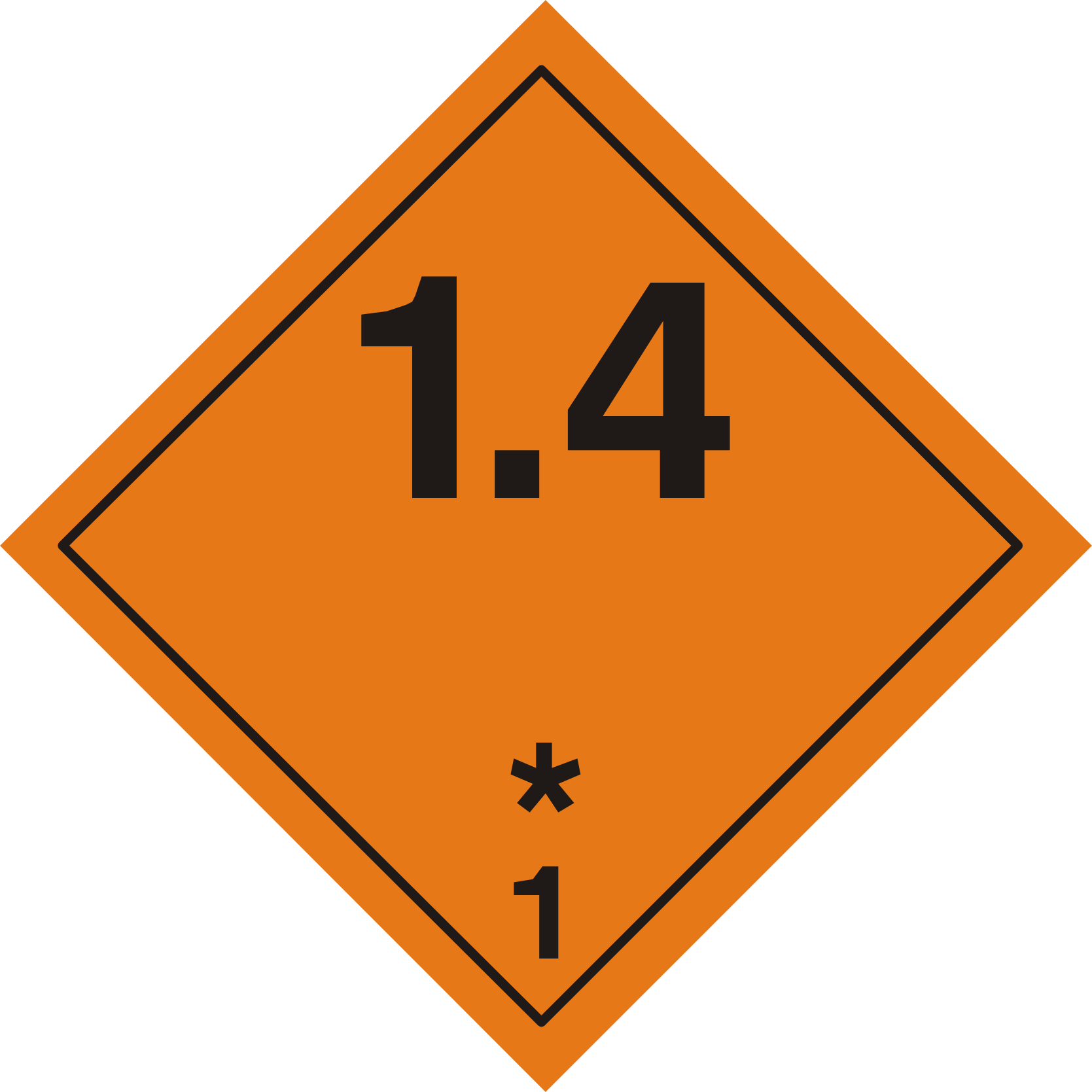
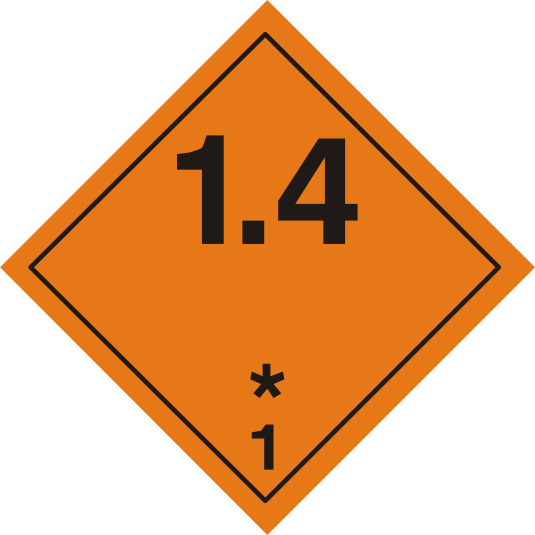
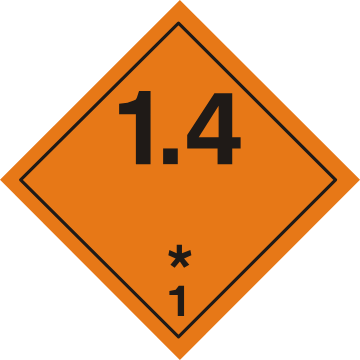
Class 1.4 – Explosives
Class 1.4 – Explosives Min. 100 × 100 mm (square set at 45°) Write the compatibility group in place of the asterisk.
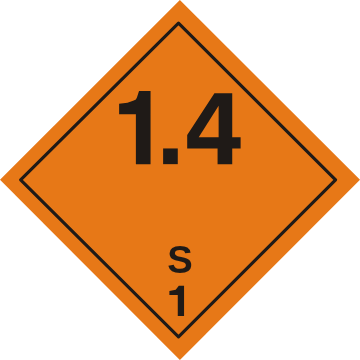
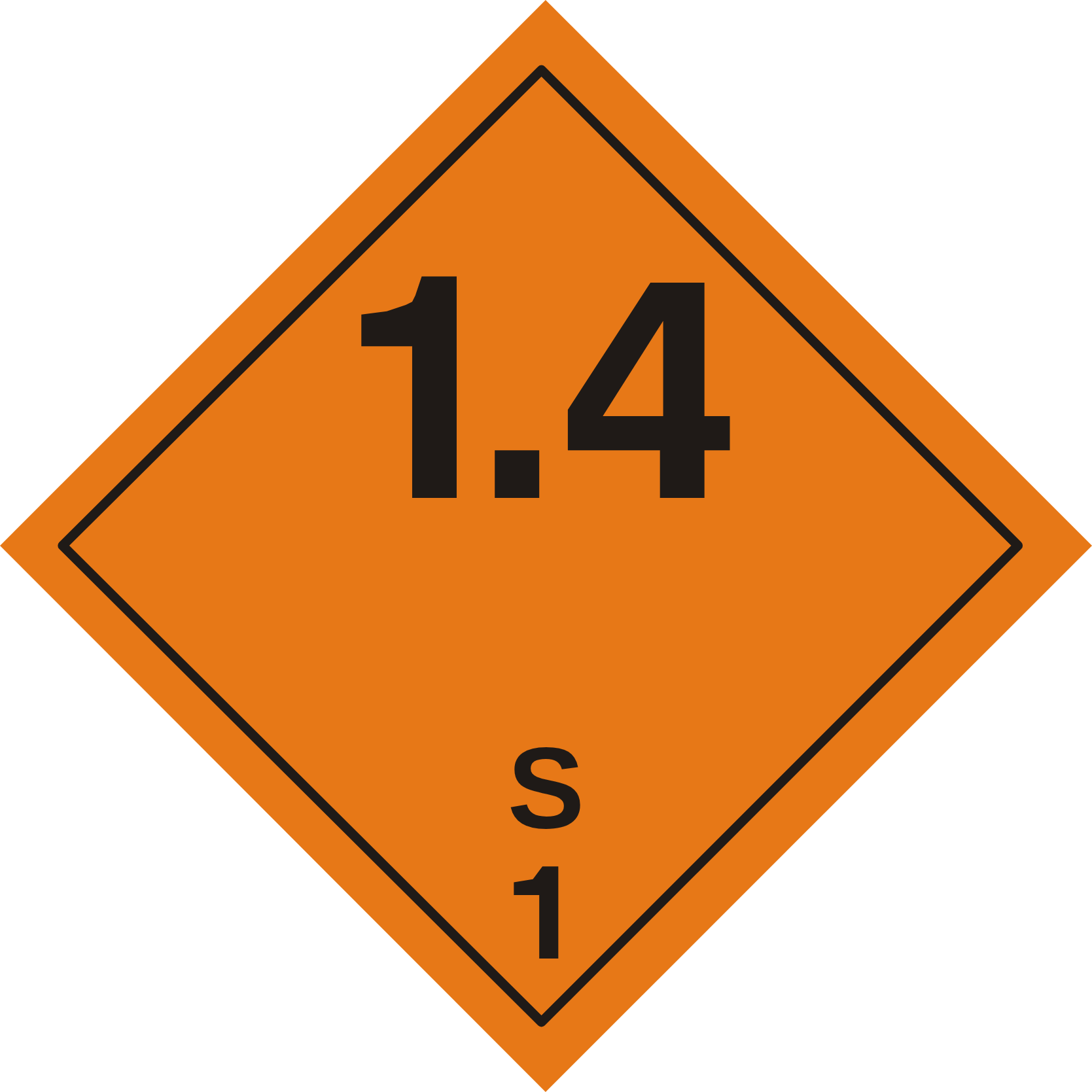
Class 1.4S – Explosives (the only Class 1 allowed on passenger aircraft)
Class 1.4S – Explosives (the only Class 1 allowed on passenger aircraft) Min. 100 × 100 mm (square set at 45°) Division 1.4 compatibility group S.
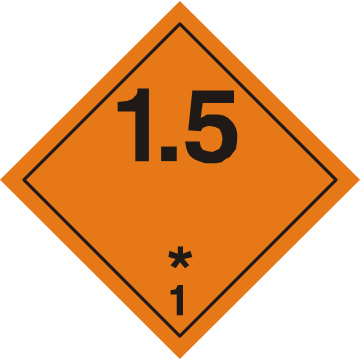
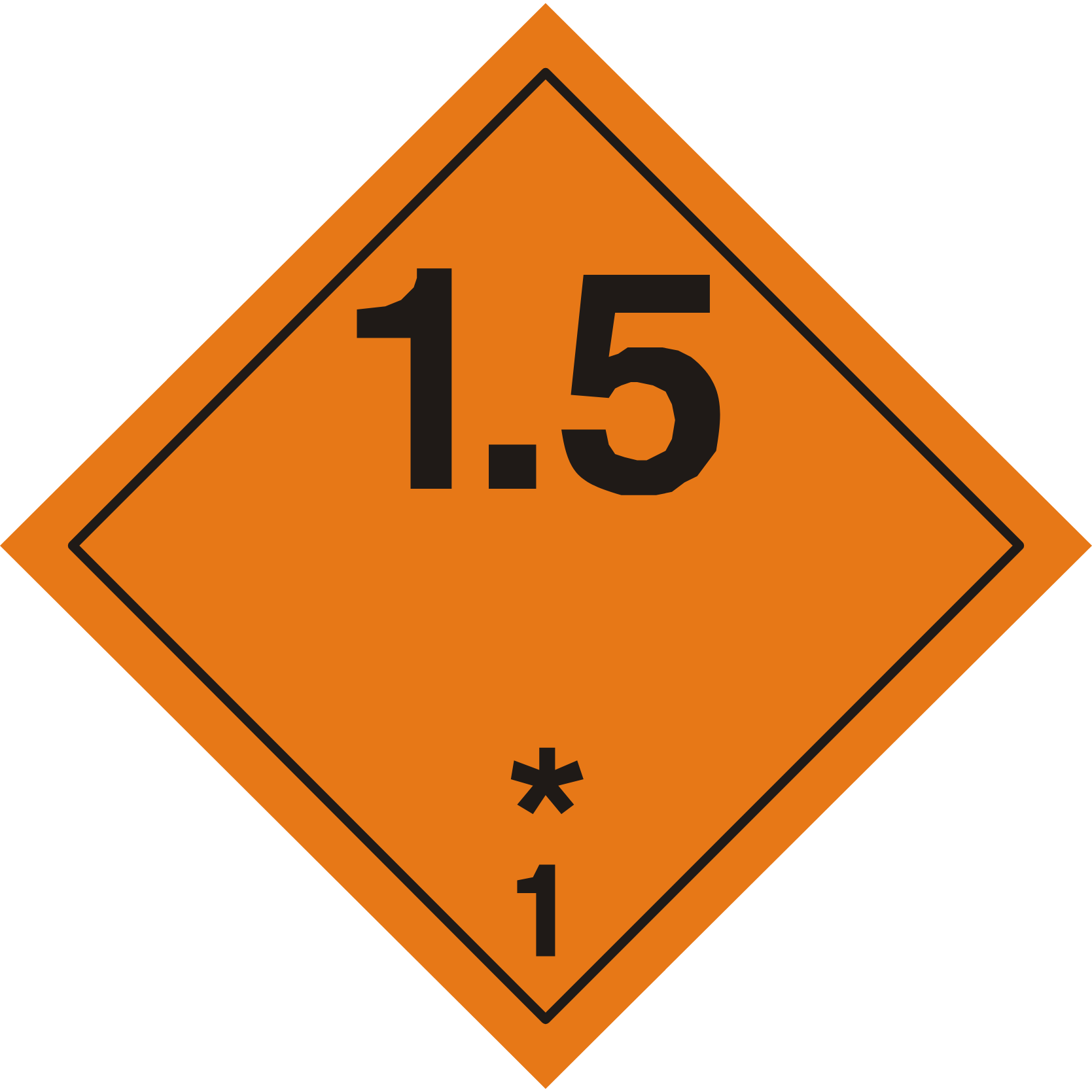
Class 1.5 – Very insensitive explosives
Class 1.5 – Very insensitive explosives Min. 100 × 100 mm (square set at 45°) Write the compatibility group in place of the asterisk.
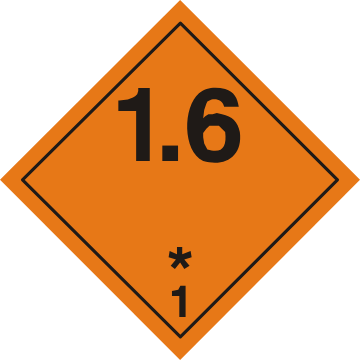
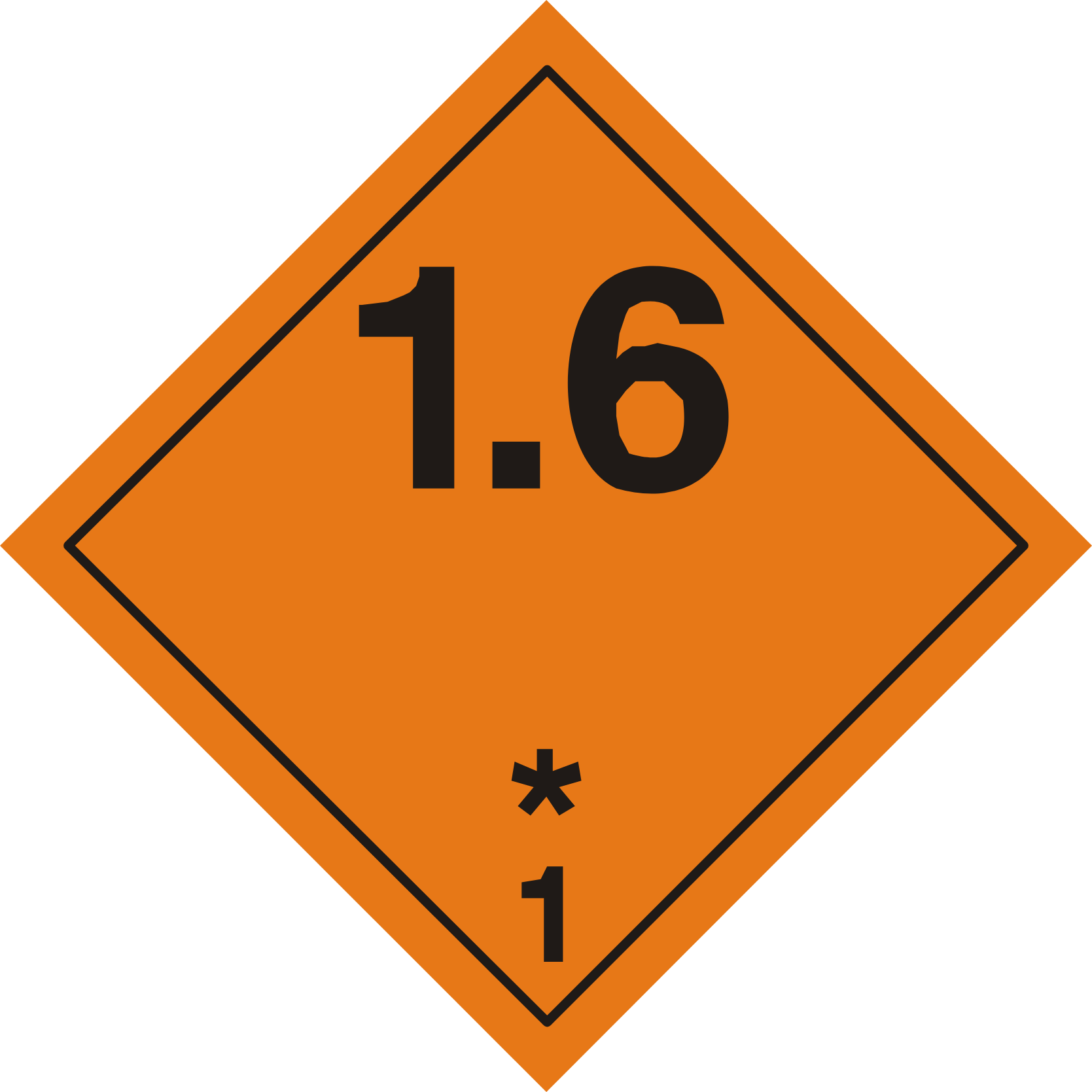
Class 1.6 – Extremely insensitive articles
Class 1.6 – Extremely insensitive articles Min. 100 × 100 mm (square set at 45°) Write the compatibility group in place of the asterisk.
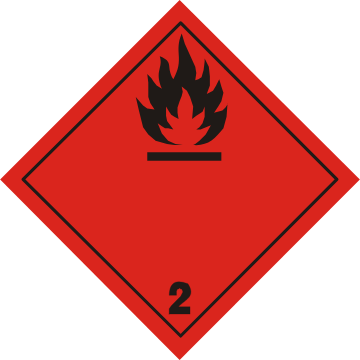
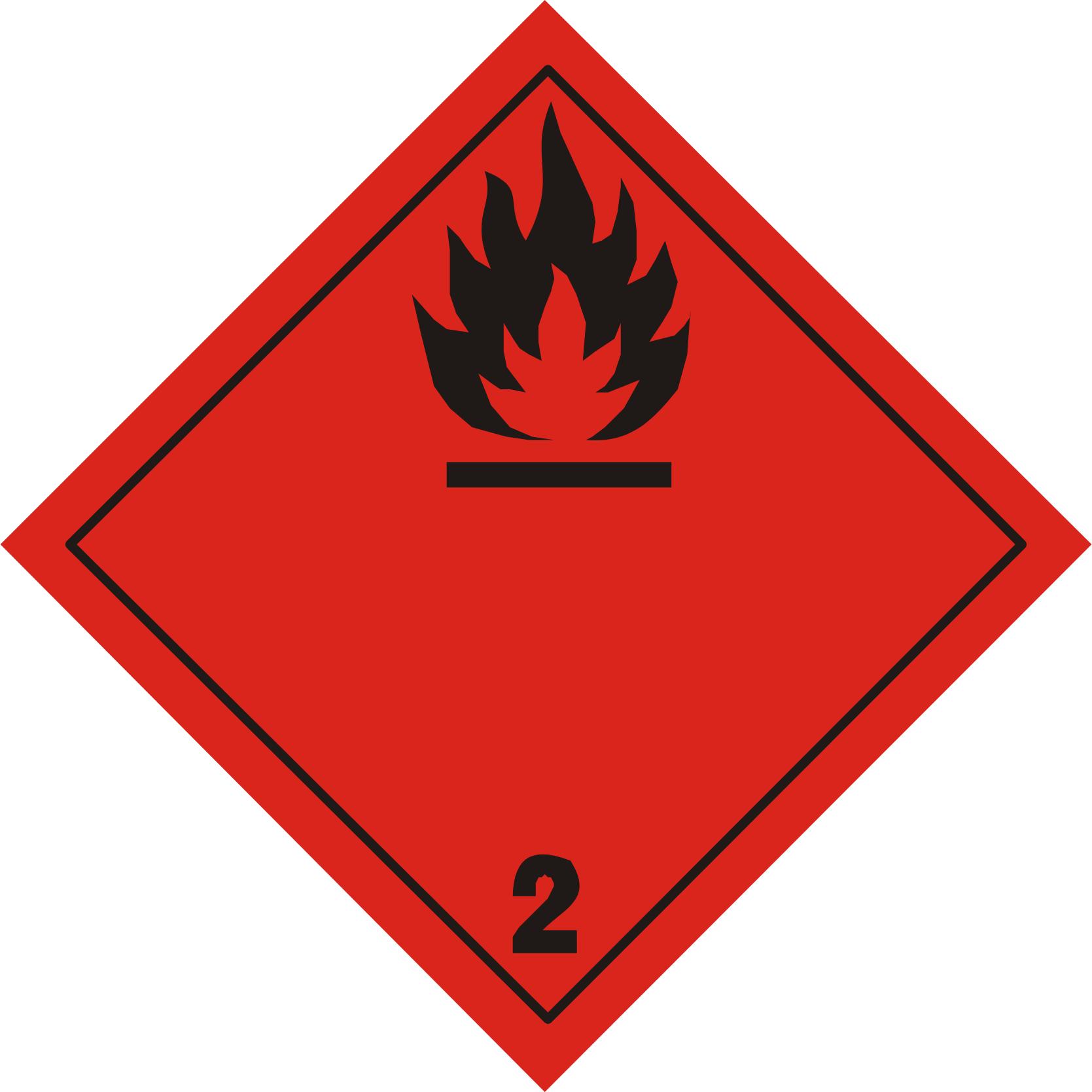
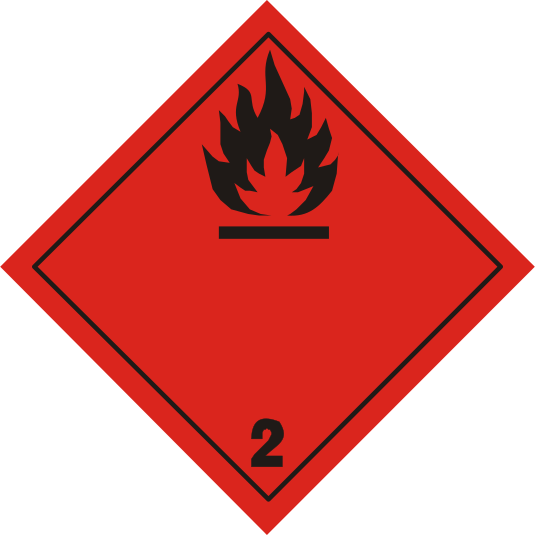
Class 2.1 – Flammable gas
Class 2.1 – Flammable gas Min. 100 × 100 mm (square set at 45°) Aerosols, lighters, butane, propane.
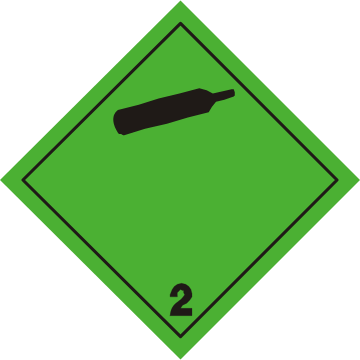
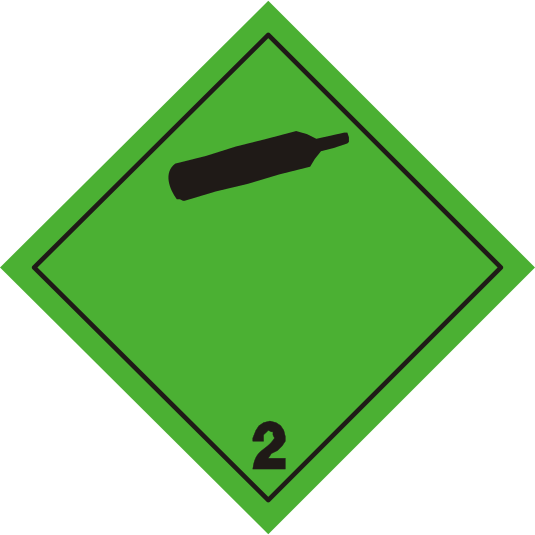
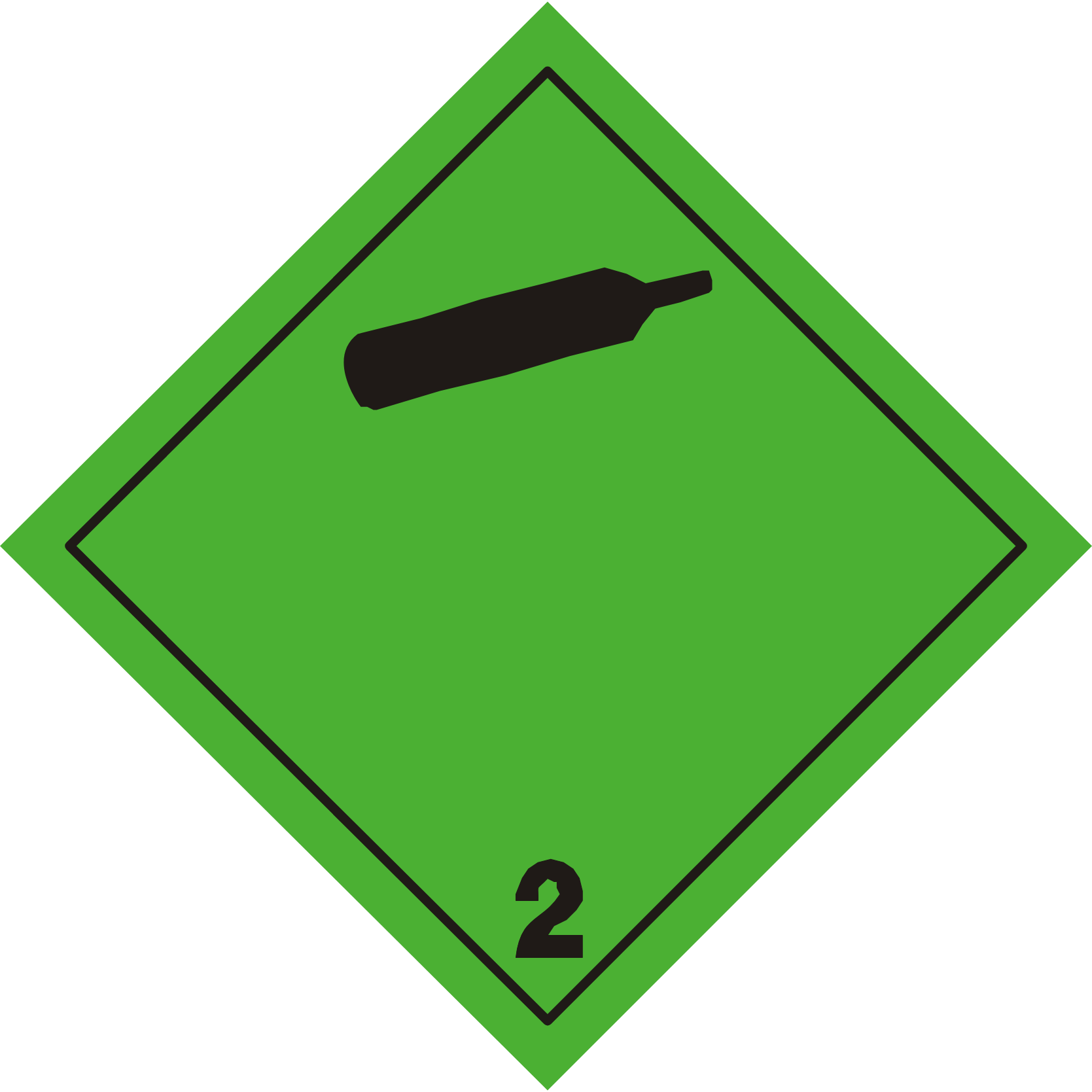
Class 2.2 – Non-flammable, non-toxic gas
Class 2.2 – Non-flammable, non-toxic gas Min. 100 × 100 mm (square set at 45°) Compressed gases, CO₂, nitrogen, fire extinguishers.
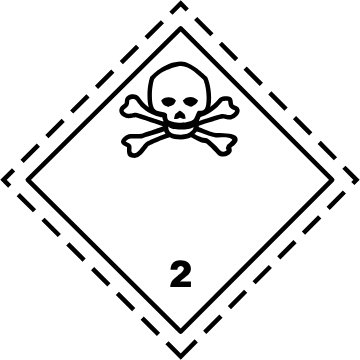
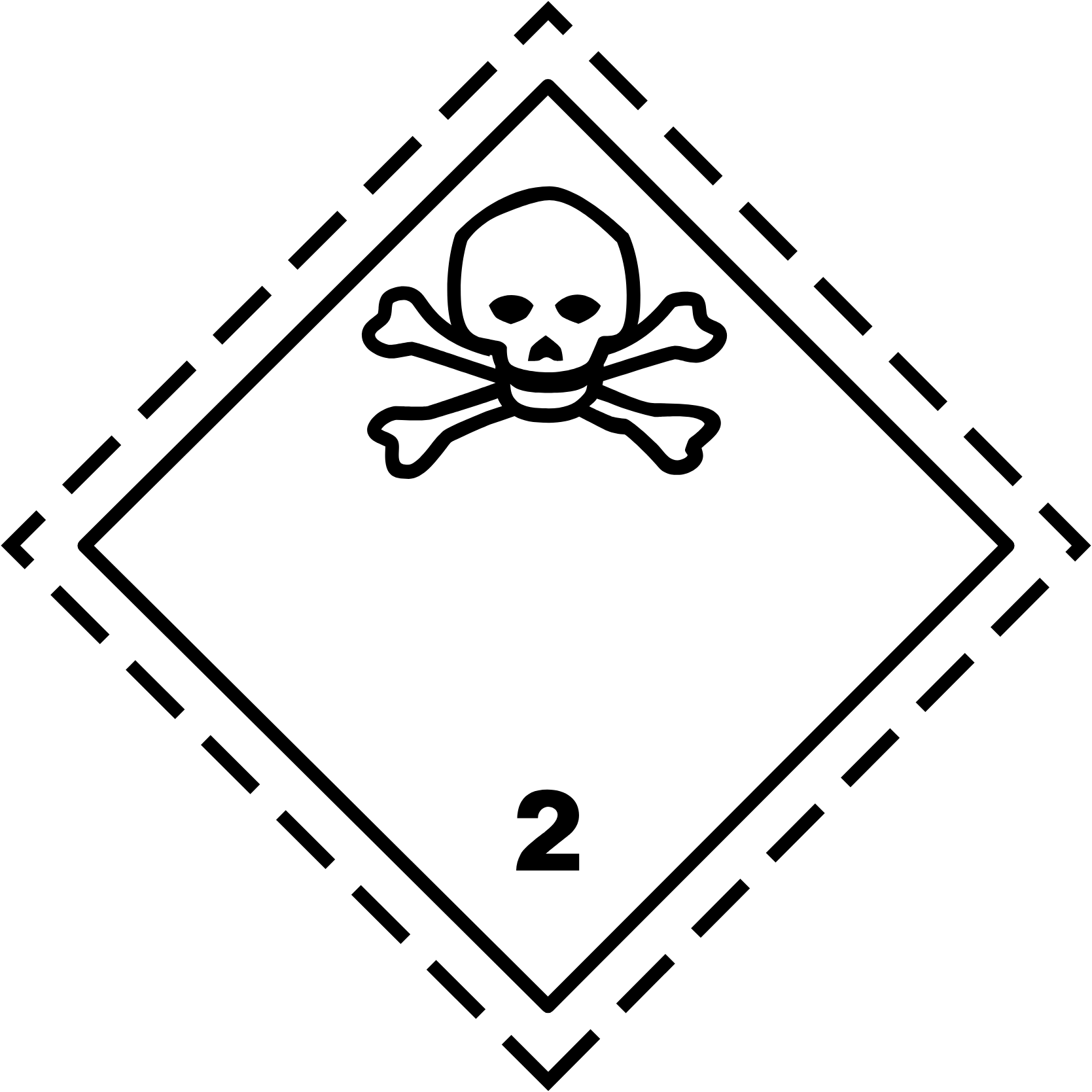
Class 2.3 – Toxic gas
Class 2.3 – Toxic gas Min. 100 × 100 mm (square set at 45°) Mostly forbidden by air; check the DGR.
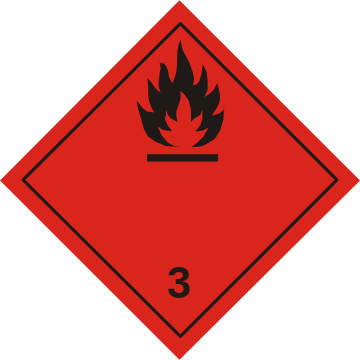
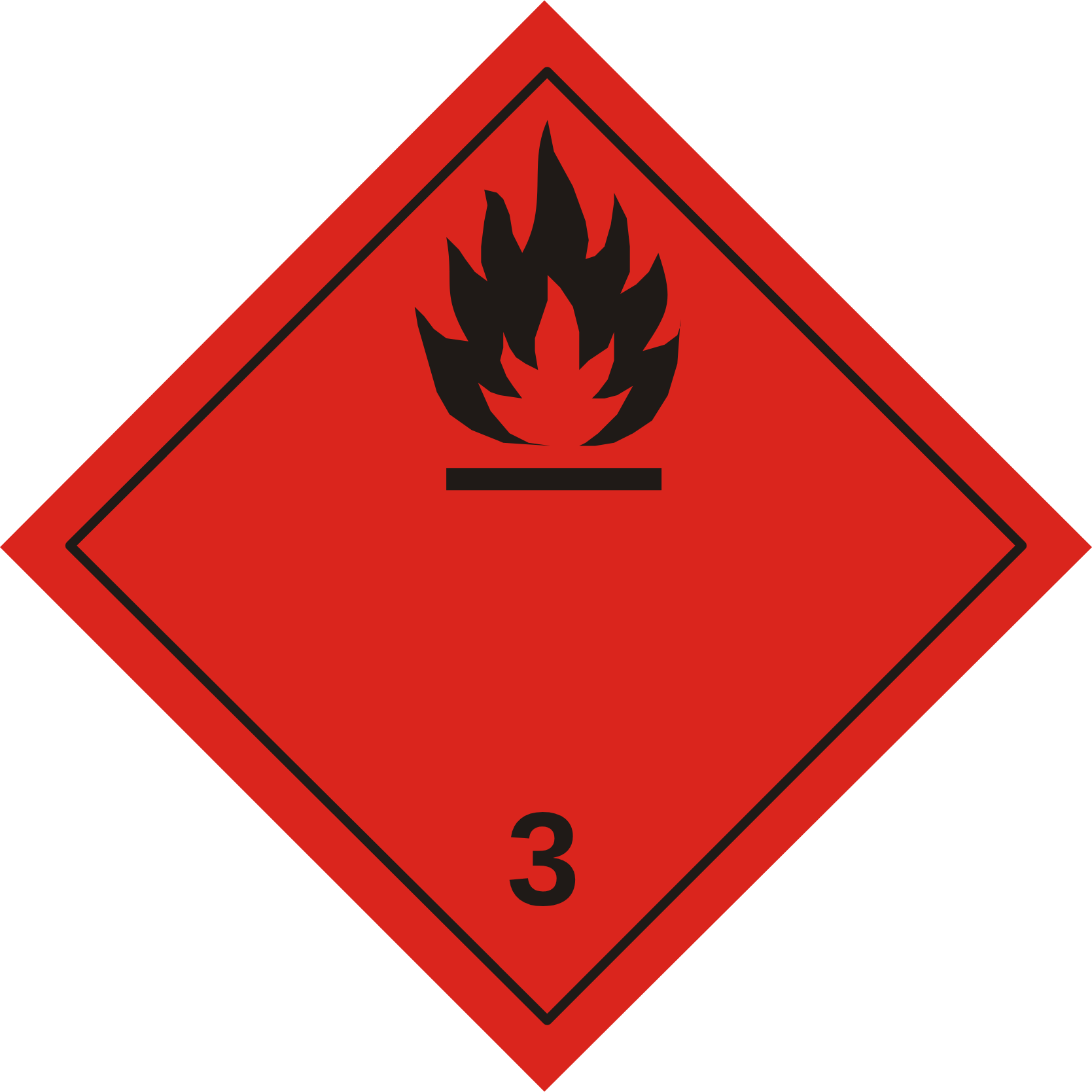
Class 3 – Flammable liquid
Class 3 – Flammable liquid Min. 100 × 100 mm (square set at 45°) Paints, perfumes, inks, adhesives, solvents.
Class 4.1 – Flammable solid
Class 4.1 – Flammable solid Min. 100 × 100 mm (square set at 45°) Matches, sulphur, self-reactive substances.
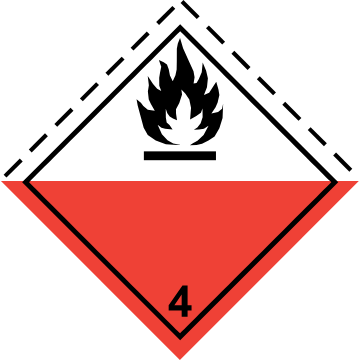
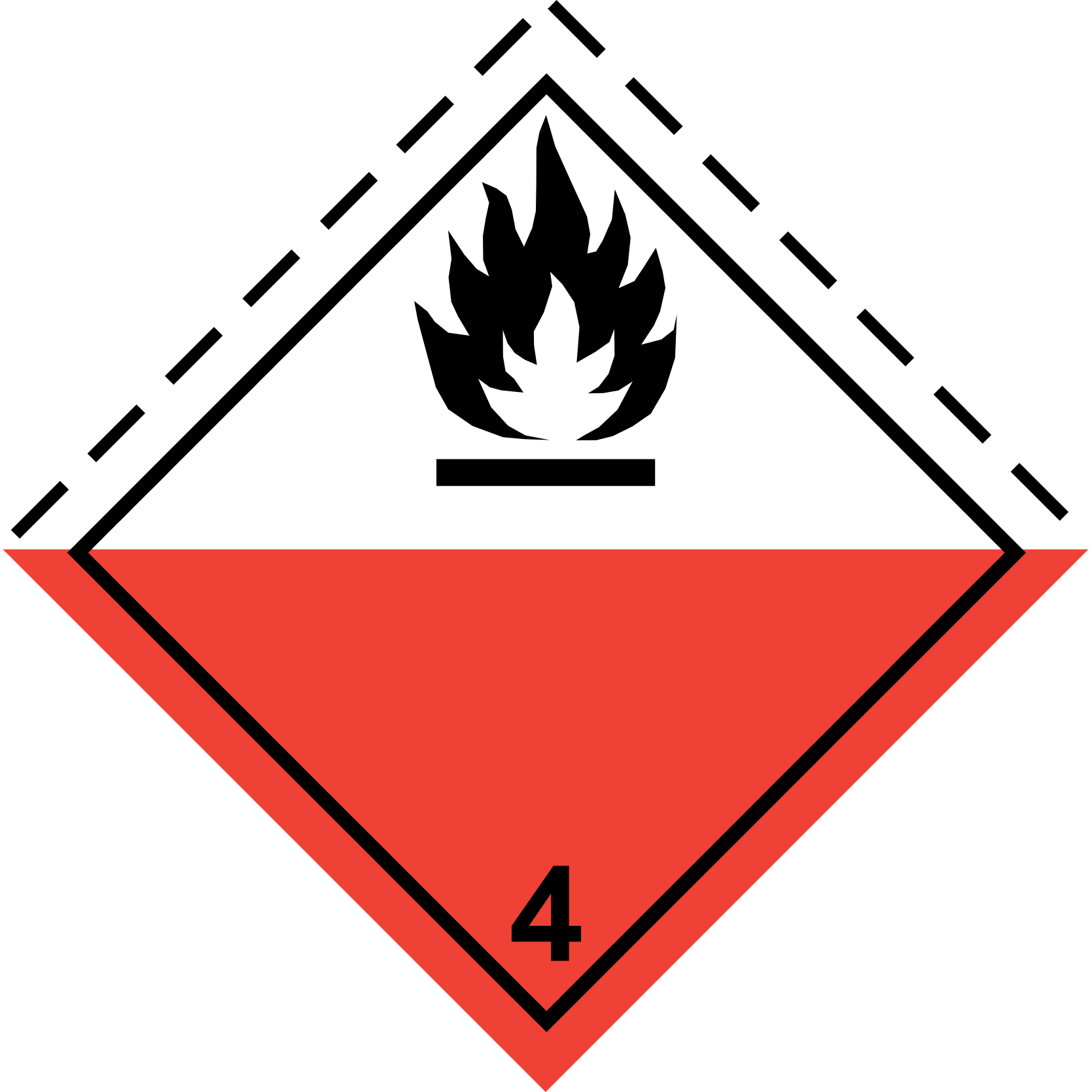
Class 4.2 – Spontaneously combustible
Class 4.2 – Spontaneously combustible Min. 100 × 100 mm (square set at 45°) Oily rags, some metal powders, charcoal.
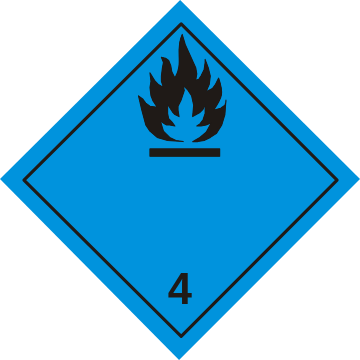
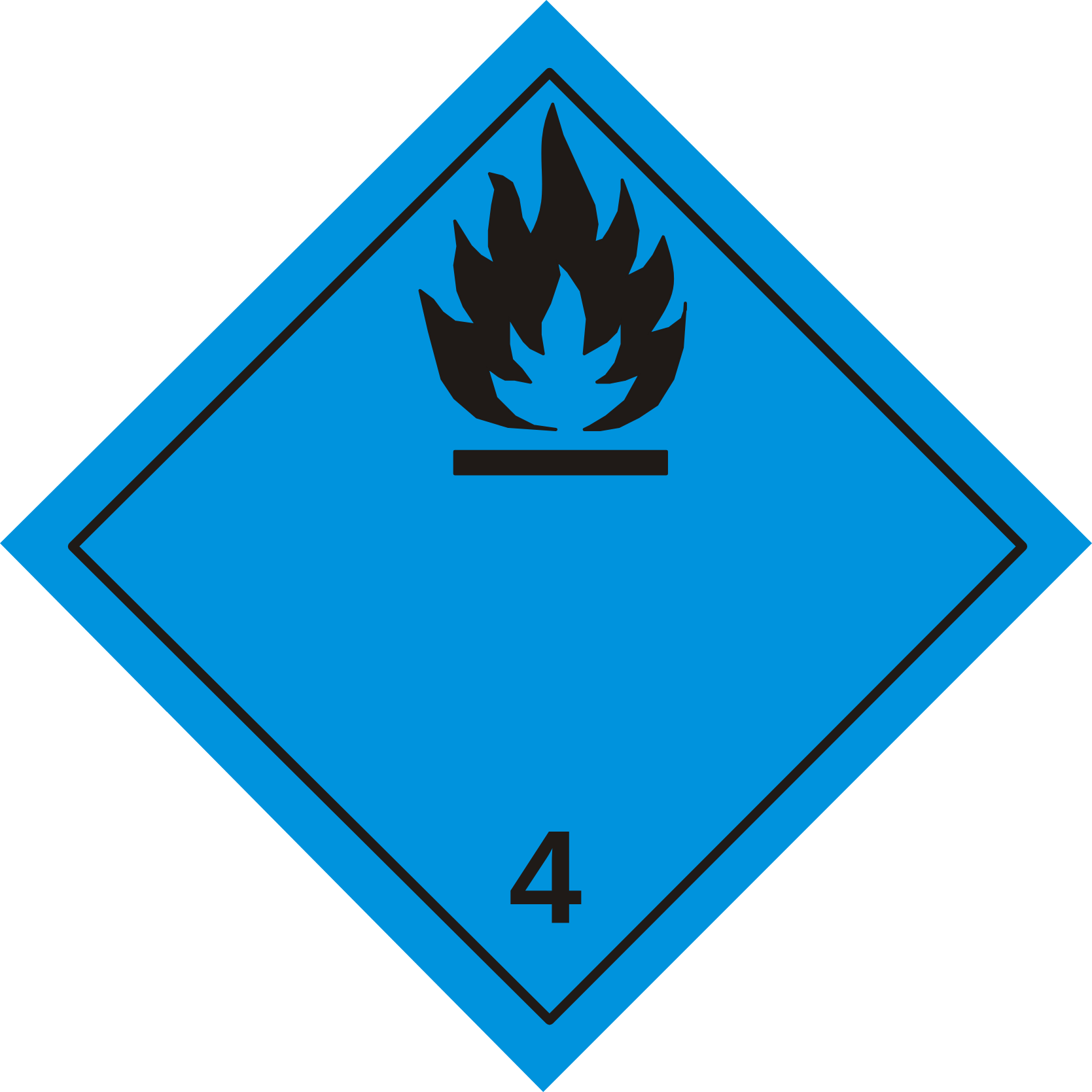
Class 4.3 – Dangerous when wet
Class 4.3 – Dangerous when wet Min. 100 × 100 mm (square set at 45°) Sodium, calcium carbide, some metal powders.
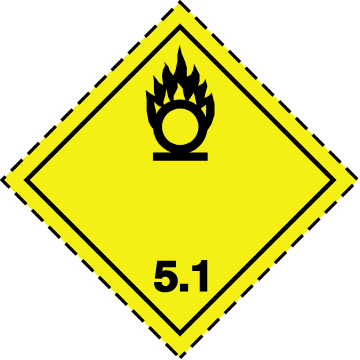
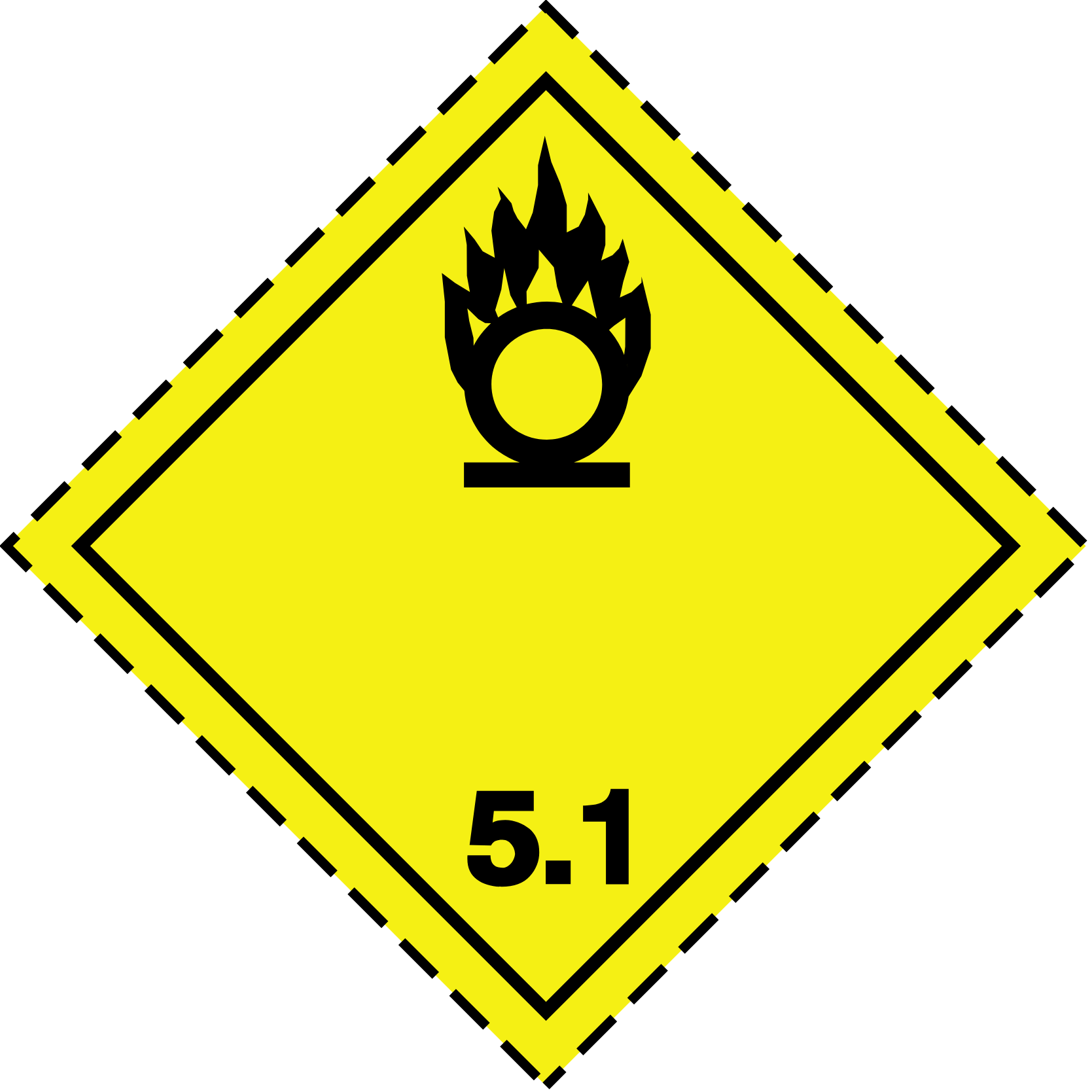
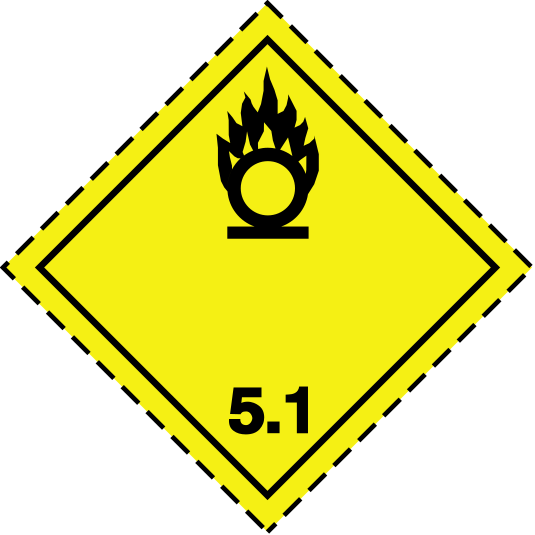
Class 5.1 – Oxidizer
Class 5.1 – Oxidizer Min. 100 × 100 mm (square set at 45°) Nitrates, peroxides, pool chlorine.
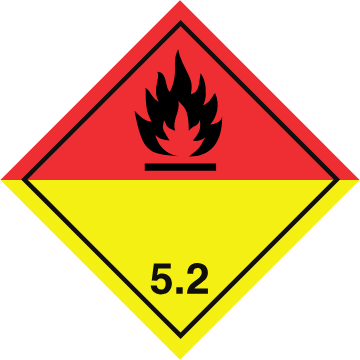
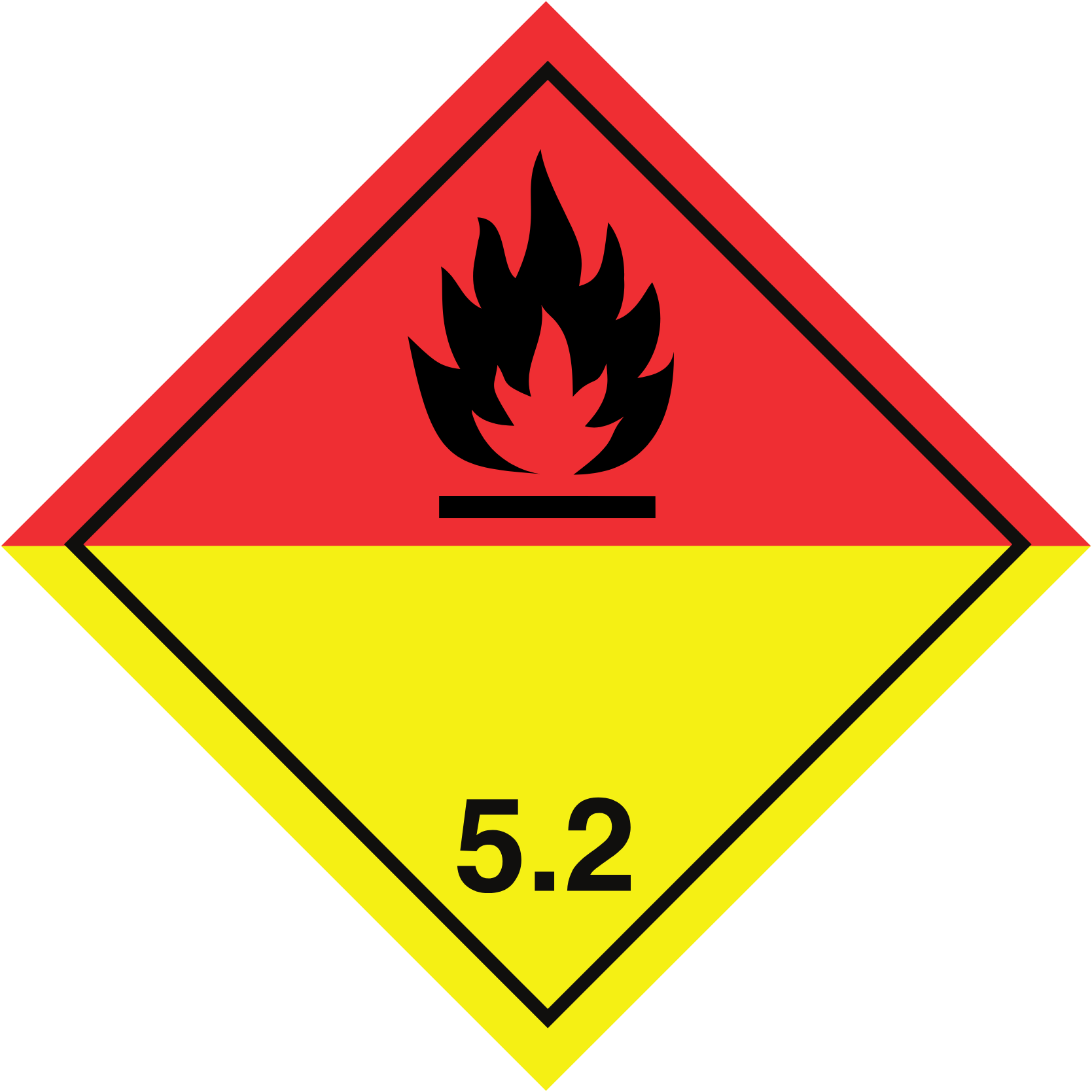
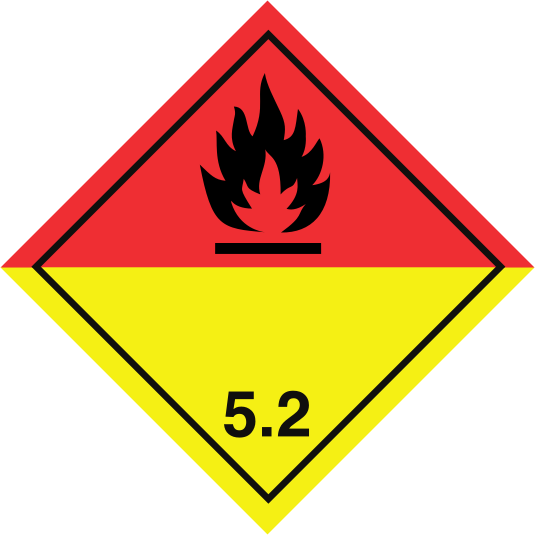
Class 5.2 – Organic peroxide
Class 5.2 – Organic peroxide Min. 100 × 100 mm (square set at 45°) Hardeners, catalysts, resins.
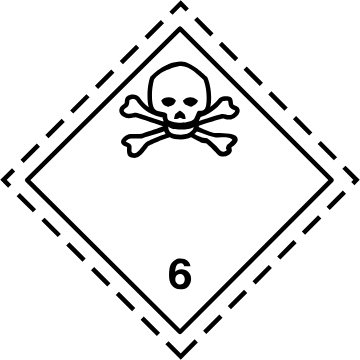
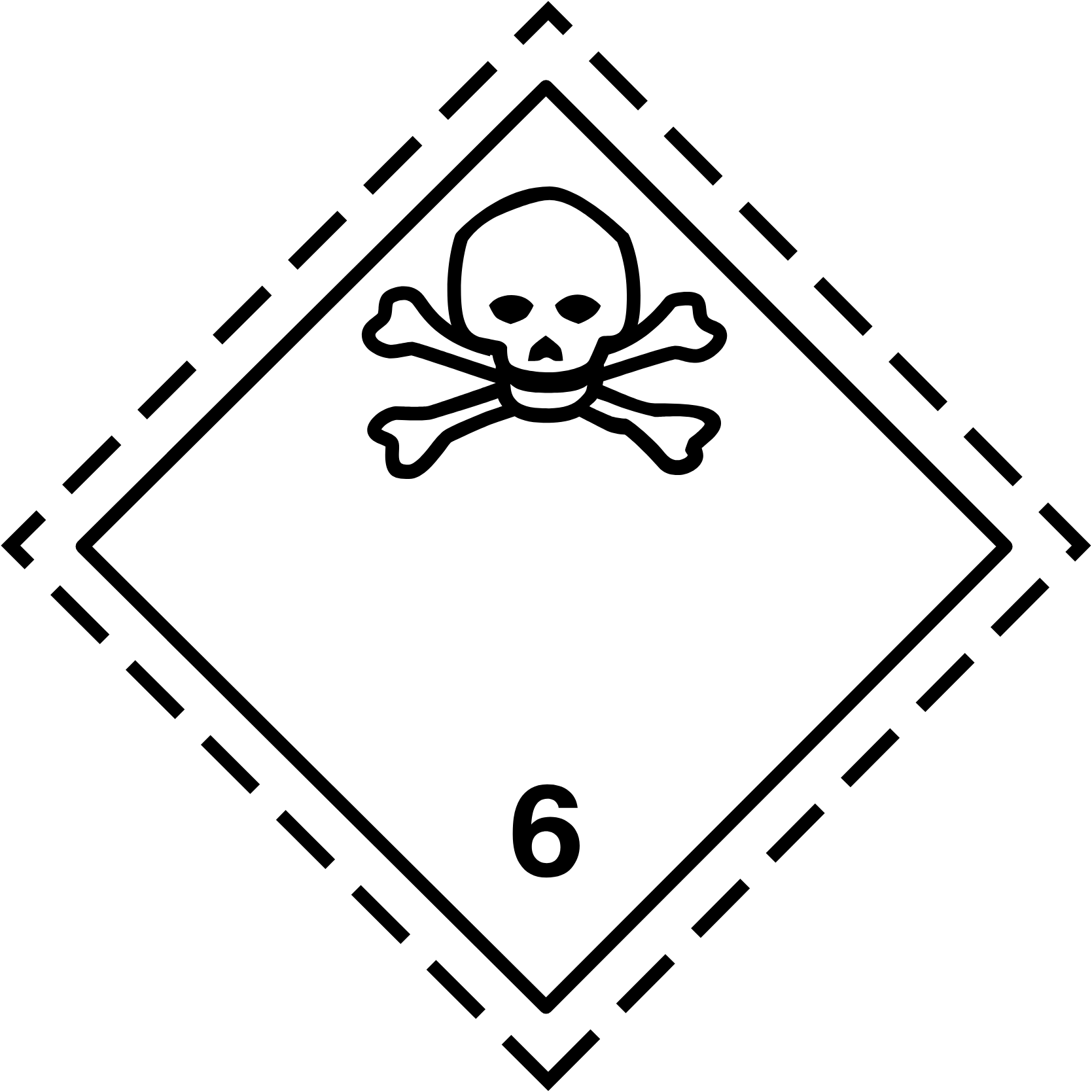
Class 6.1 – Toxic substance
Class 6.1 – Toxic substance Min. 100 × 100 mm (square set at 45°) Pesticides, some dyes and chemicals.
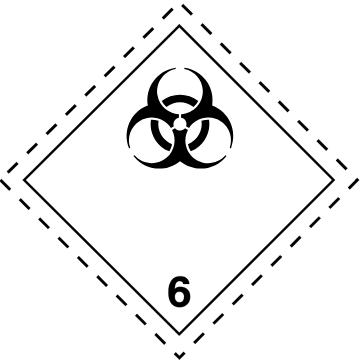
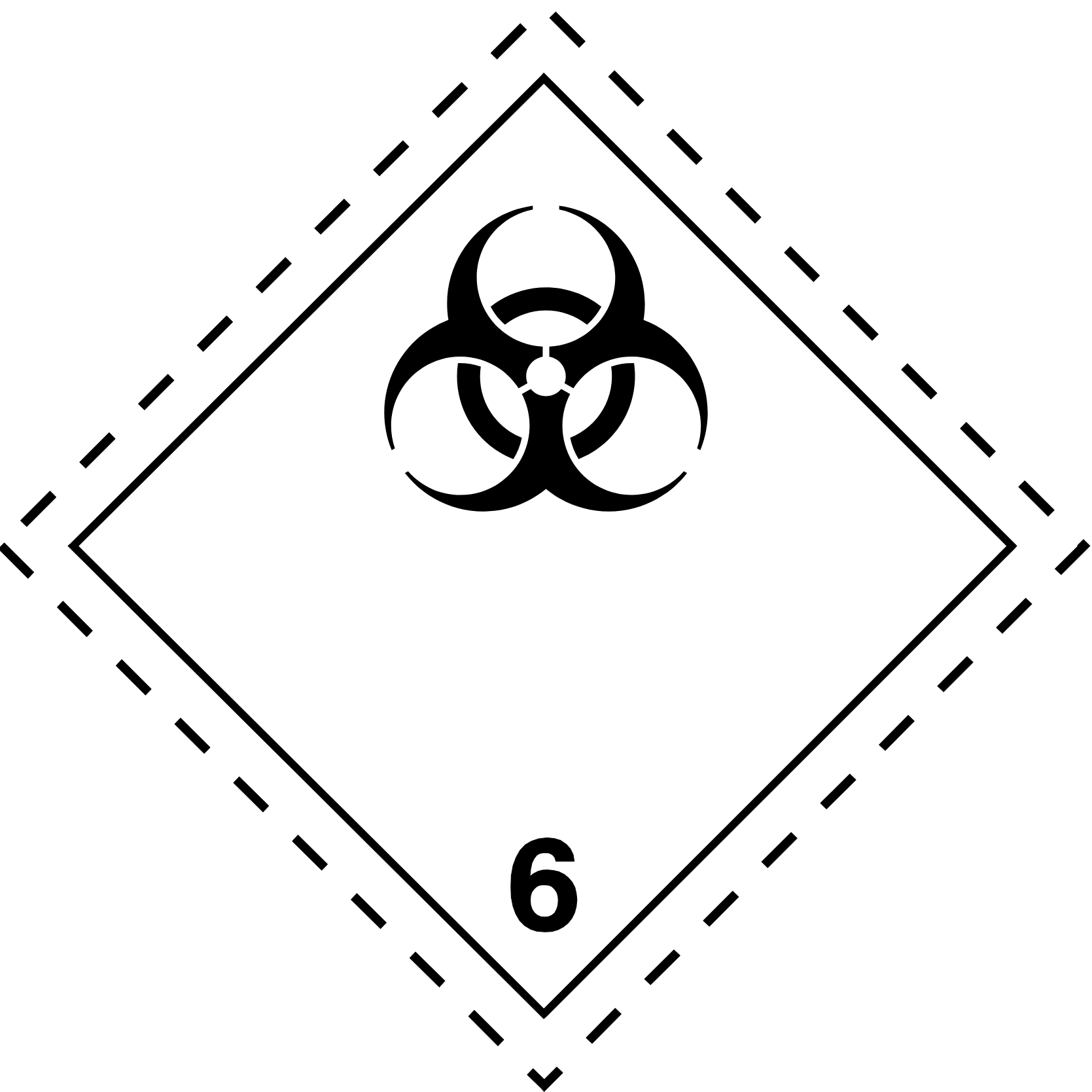
Class 6.2 – Infectious substance
Class 6.2 – Infectious substance Min. 100 × 100 mm (square set at 45°) Category A infectious substances. Category B uses the UN3373 mark instead.
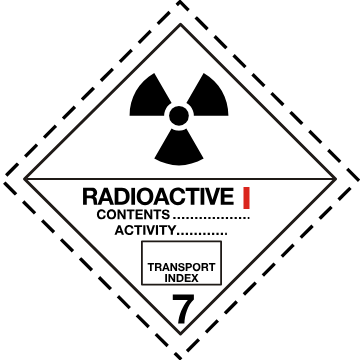
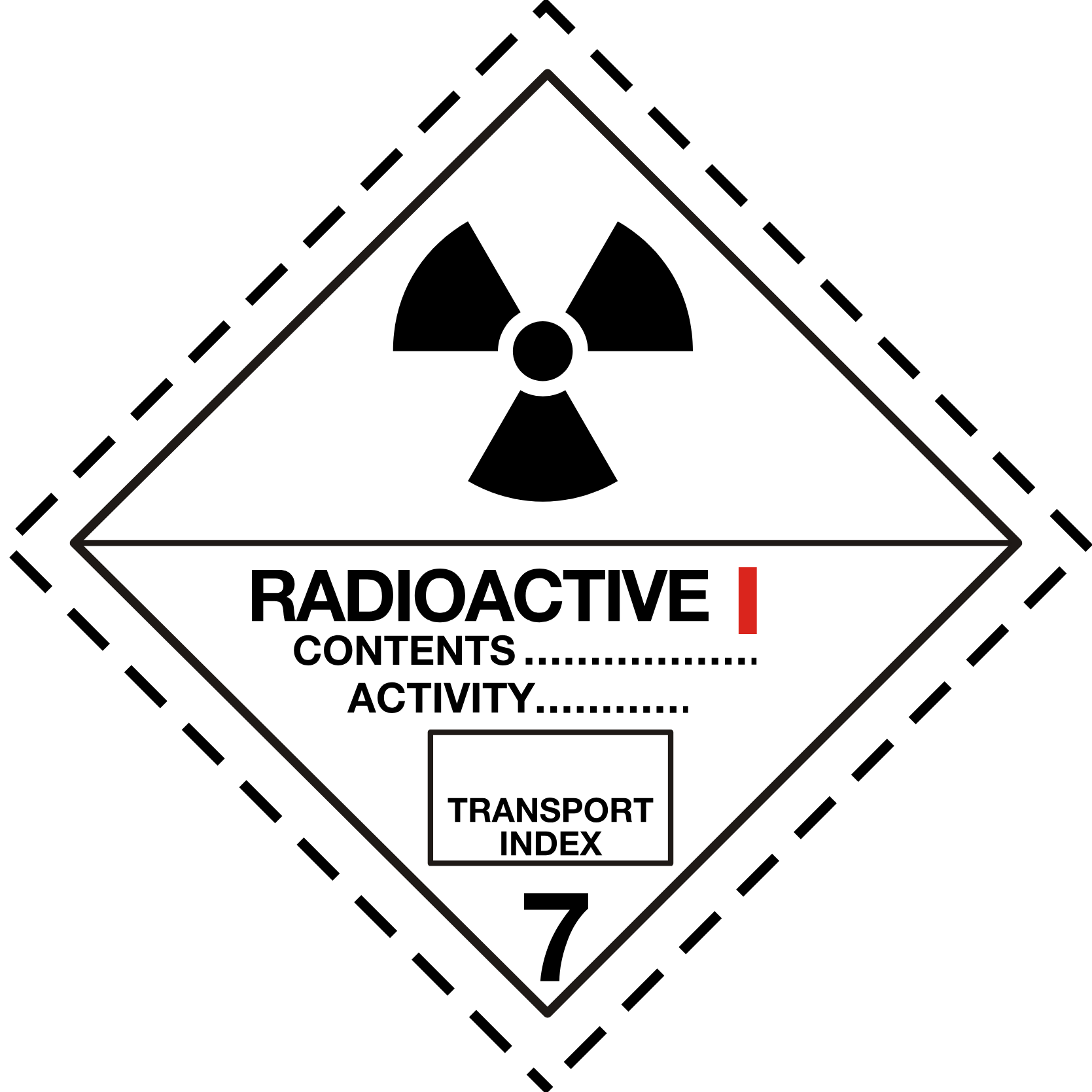
Class 7 – Radioactive, Category I-WHITE
Class 7 – Radioactive, Category I-WHITE Min. 100 × 100 mm (square set at 45°) Fill in contents and activity.
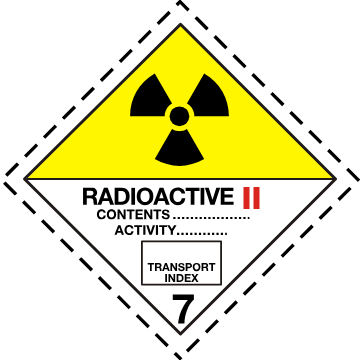
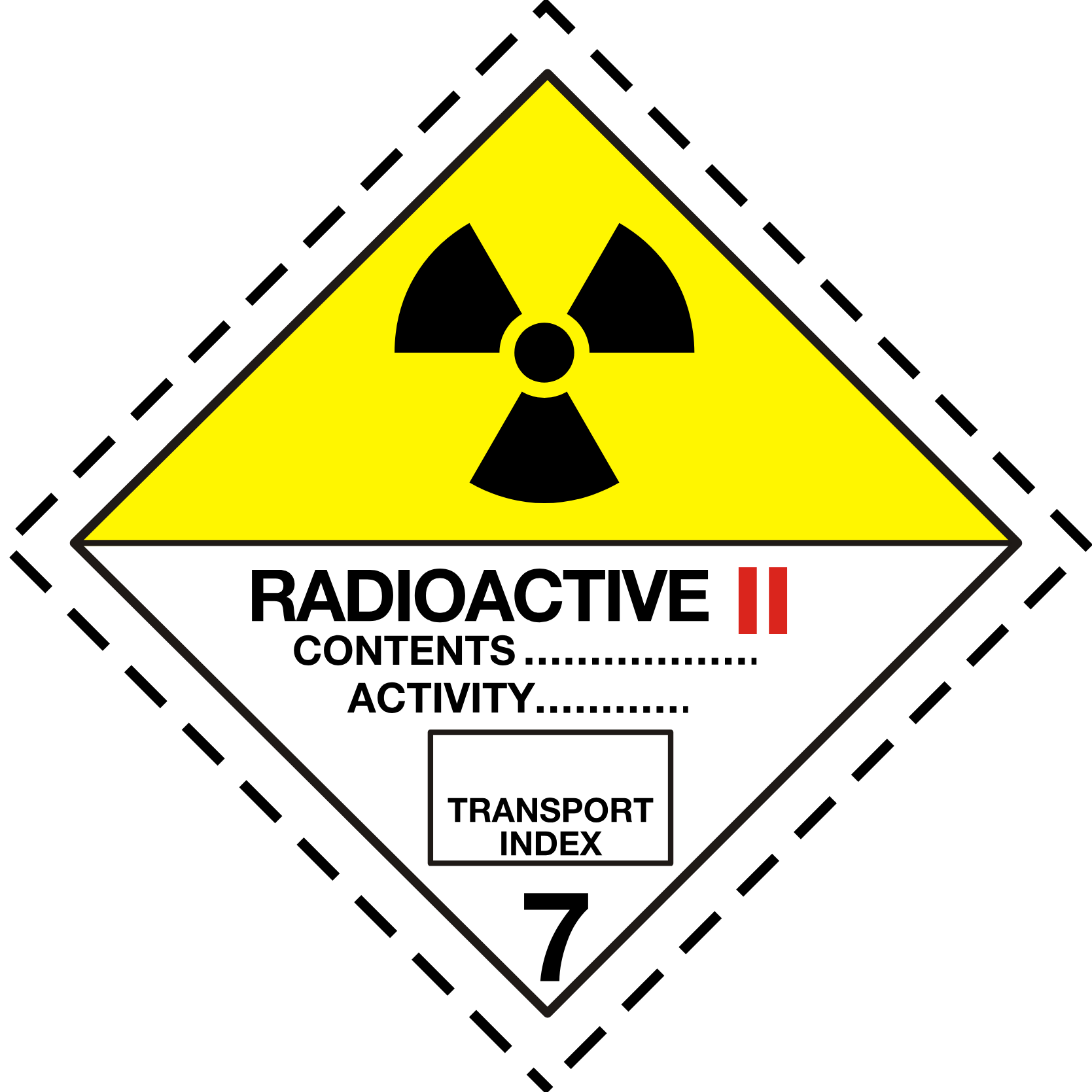
Class 7 – Radioactive, Category II-YELLOW
Class 7 – Radioactive, Category II-YELLOW Min. 100 × 100 mm (square set at 45°) Fill in contents, activity and transport index.
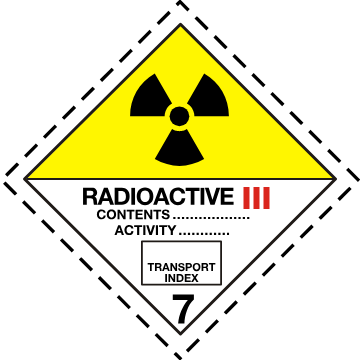
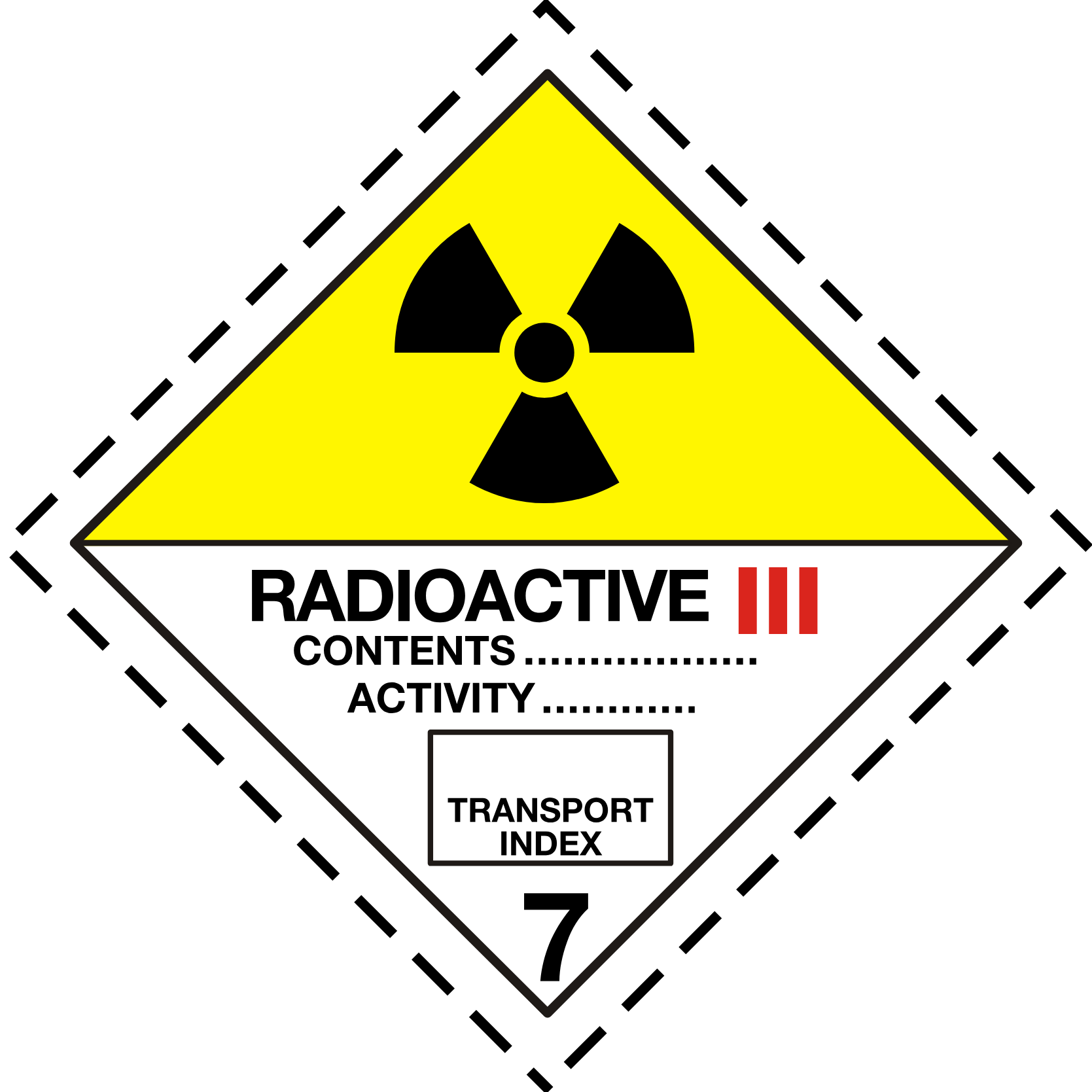
Class 7 – Radioactive, Category III-YELLOW
Class 7 – Radioactive, Category III-YELLOW Min. 100 × 100 mm (square set at 45°) Fill in contents, activity and transport index.
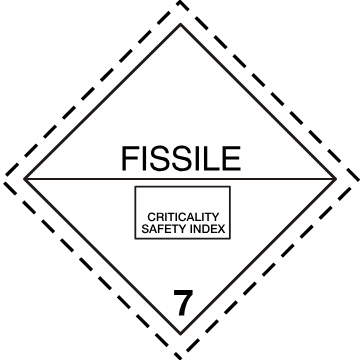
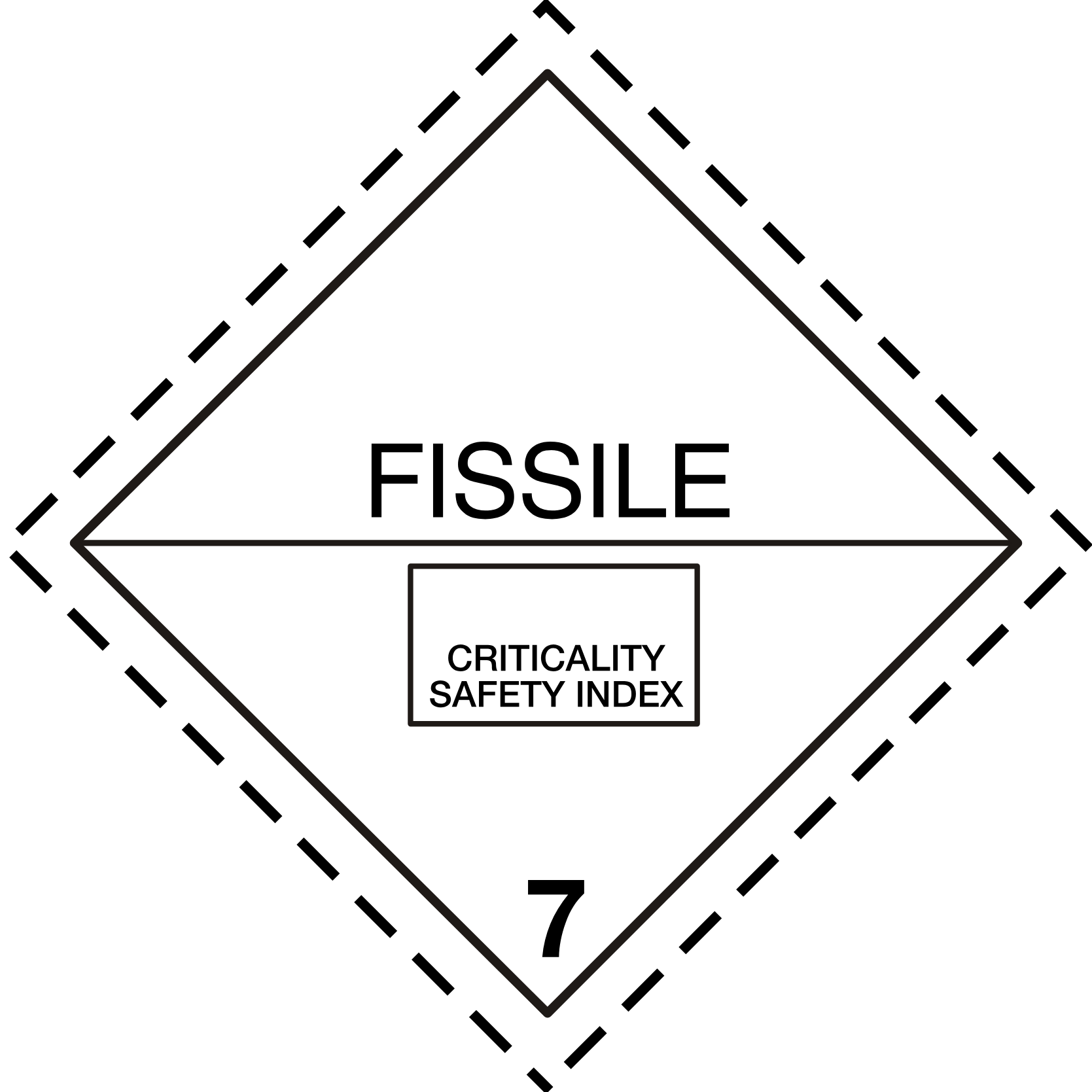
Class 7 – Fissile material
Class 7 – Fissile material Min. 100 × 100 mm (square set at 45°) Fill in the criticality safety index.
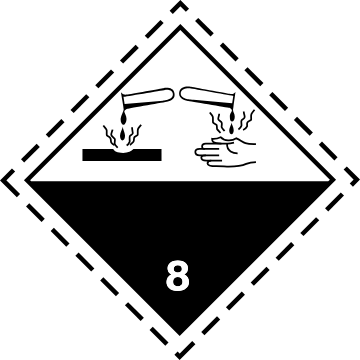
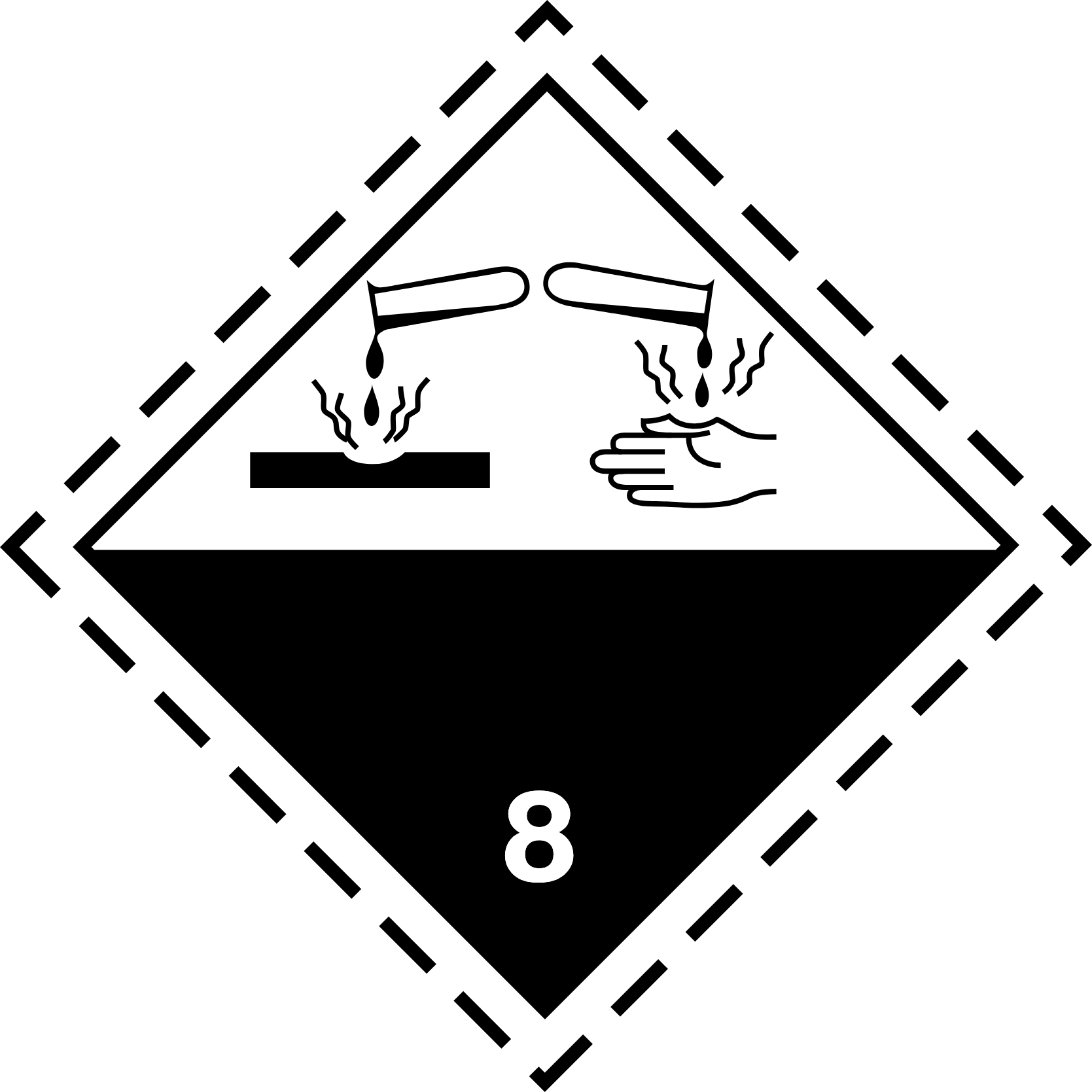
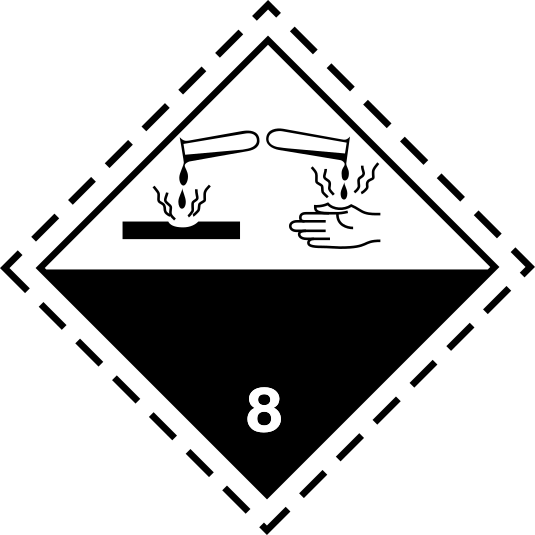
Class 8 – Corrosive
Class 8 – Corrosive Min. 100 × 100 mm (square set at 45°) Acids, alkalis, wet-cell batteries, mercury.
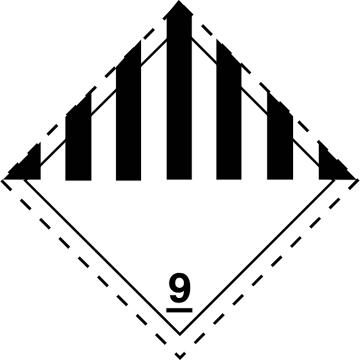
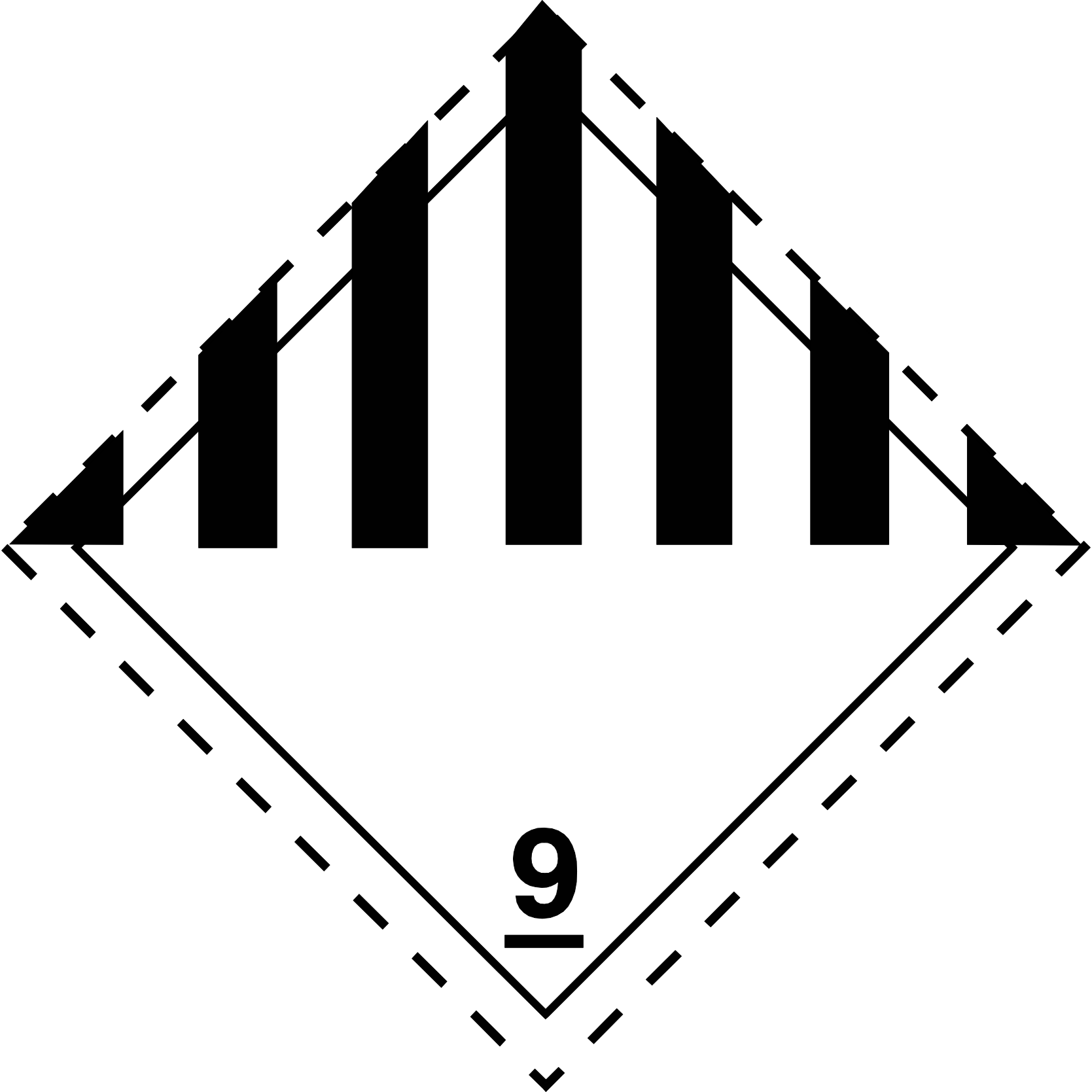
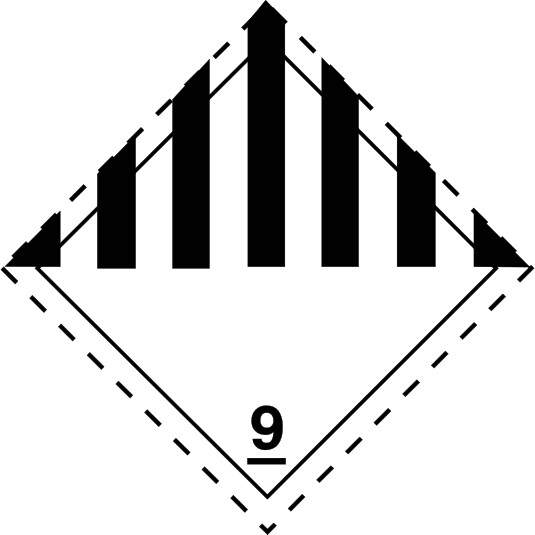
Class 9 – Miscellaneous dangerous goods
Class 9 – Miscellaneous dangerous goods Min. 100 × 100 mm (square set at 45°) Dry ice (UN1845), magnetized material, vehicles and engines, environmentally hazardous substances.
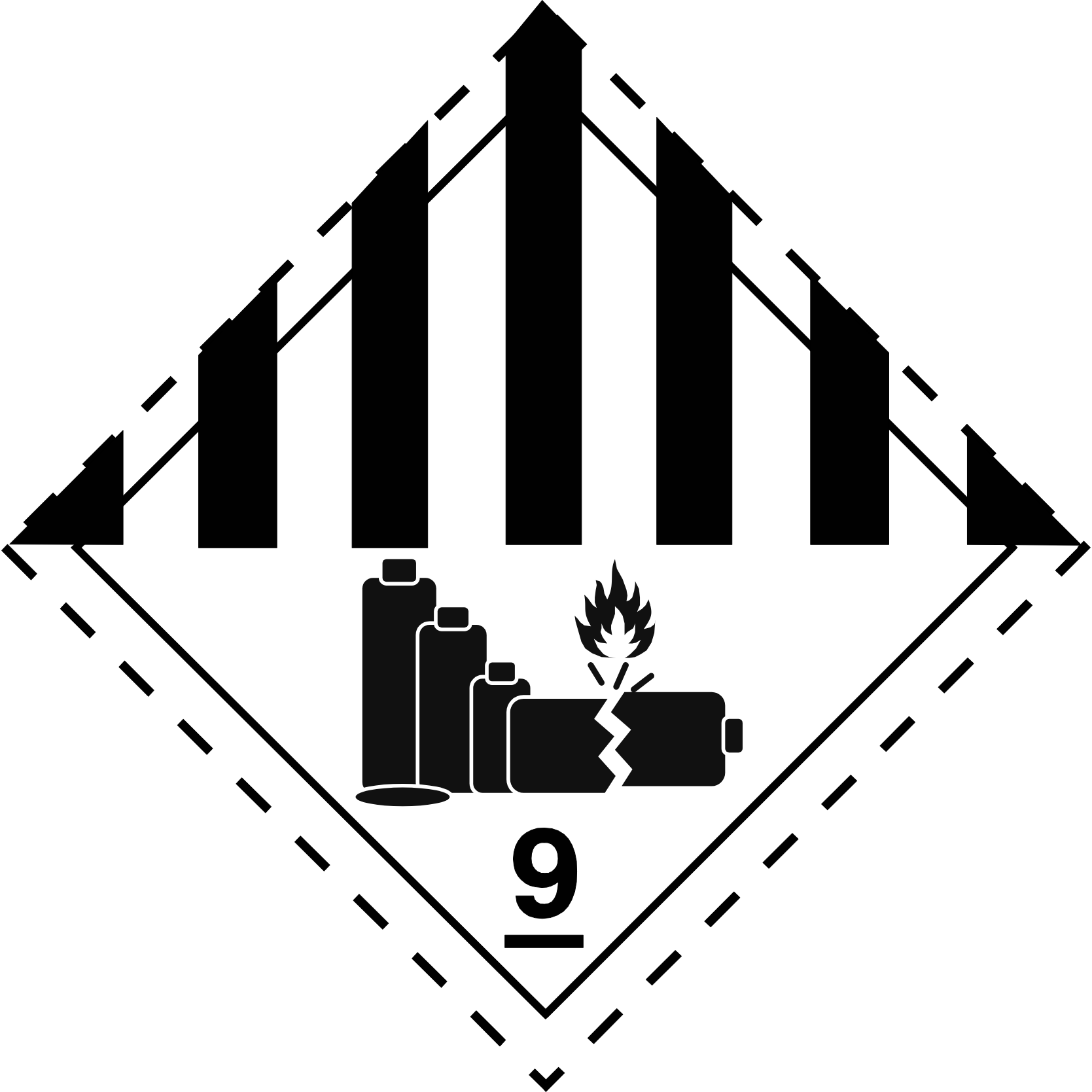
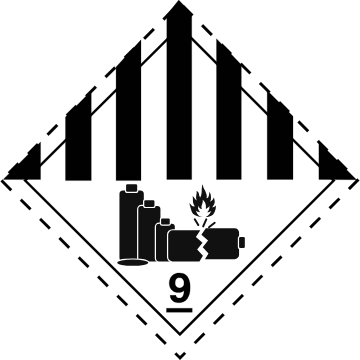
Class 9 – Lithium & sodium-ion batteries (9A)
Class 9 – Lithium & sodium-ion batteries (9A) Min. 100 × 100 mm (square set at 45°) Required for fully regulated (Section I/IA/IB) lithium and sodium-ion battery shipments.
HANDLING LABELS · 5

Handling labels

Extra labels that tell handlers how to load and store the package, on top of the hazard label.
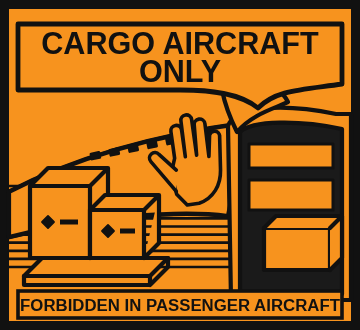
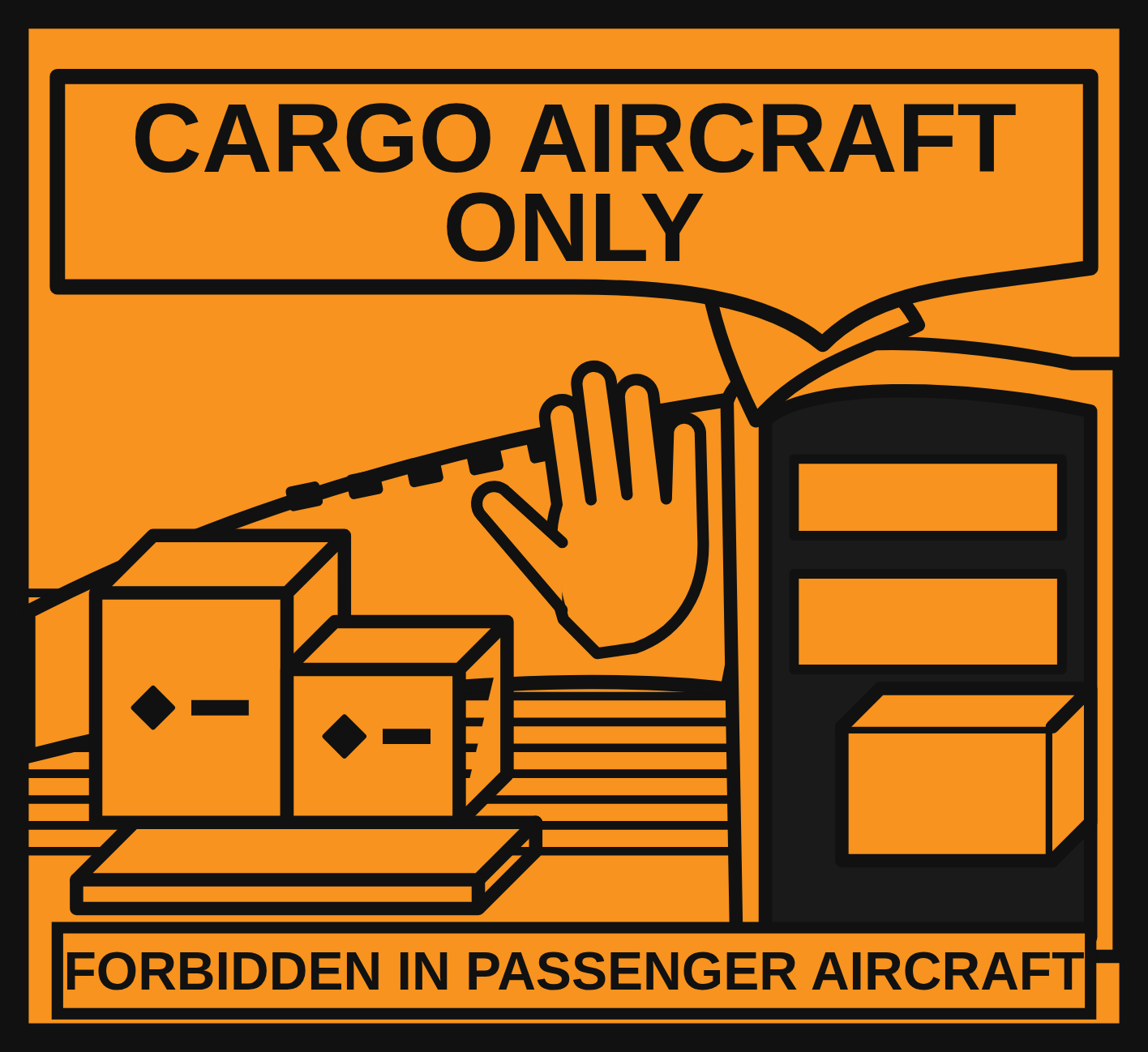
Cargo Aircraft Only (CAO)
Cargo Aircraft Only (CAO) Min. 120 × 110 mm For dangerous goods permitted only on freighters. Put it on the same surface as the hazard label.
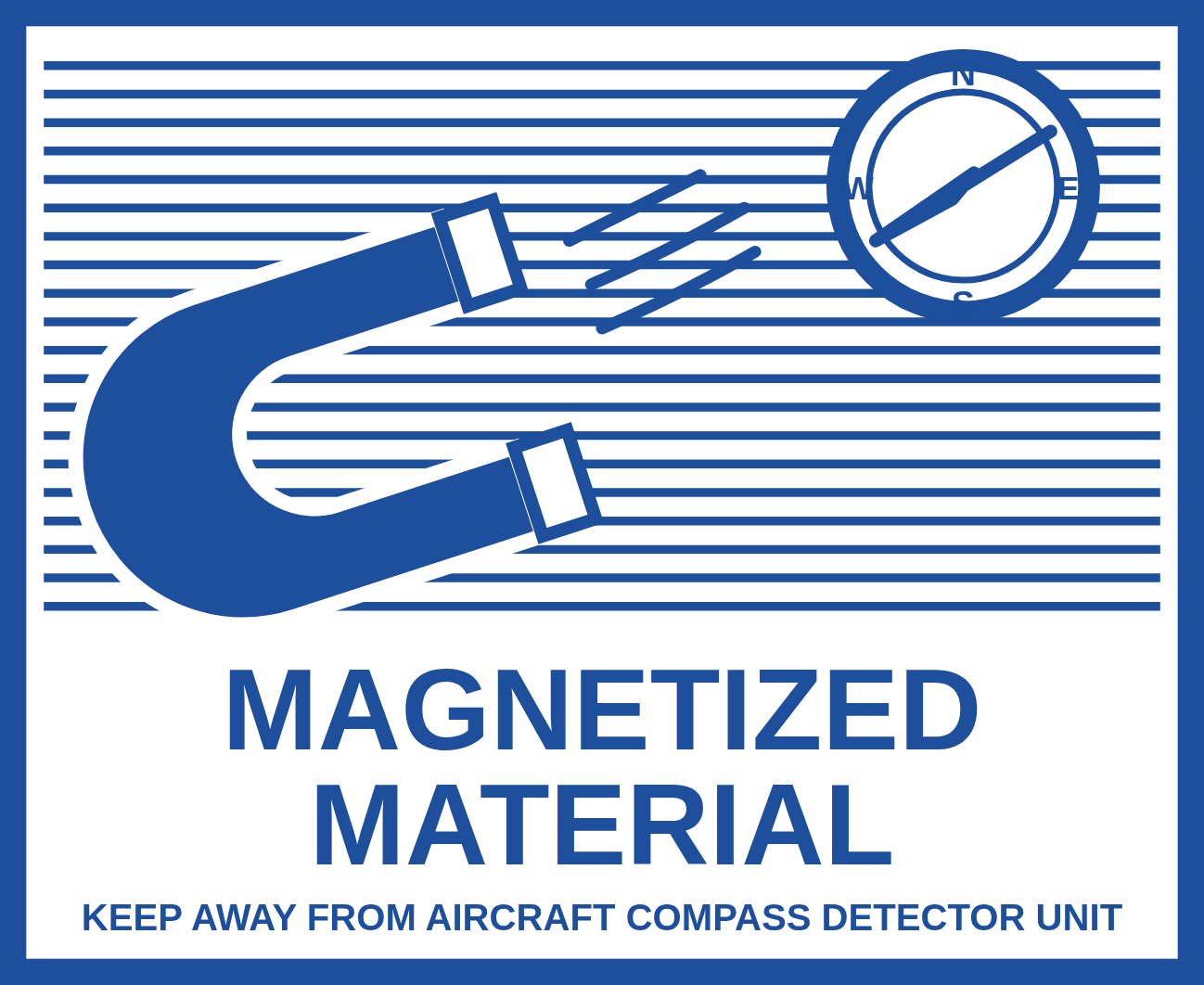
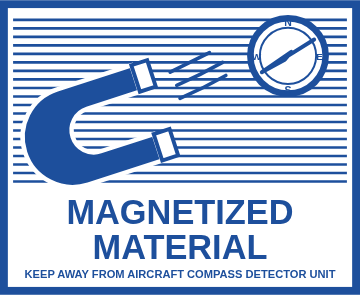
Magnetized material
Magnetized material Min. 110 × 90 mm For magnetized material that meets the DGR field-strength limits (UN2807).
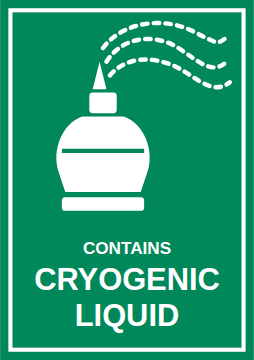
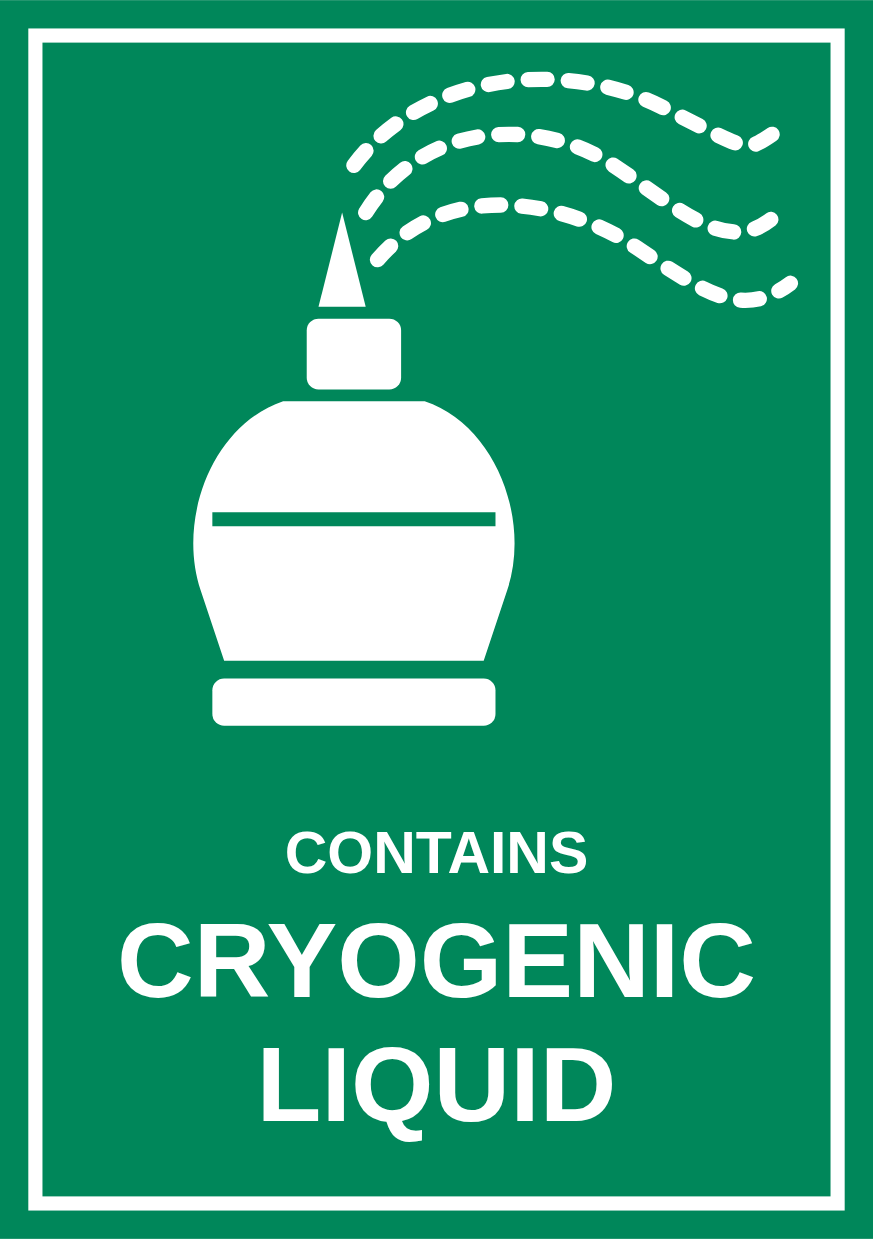
Cryogenic liquid
Cryogenic liquid Min. 74 × 105 mm For refrigerated liquefied gases such as liquid nitrogen in dry shippers.
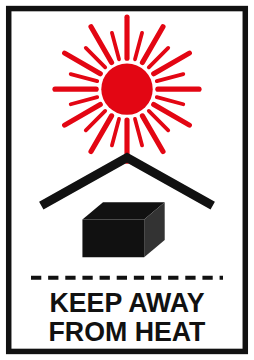
Keep away from heat
Keep away from heat Min. 74 × 105 mm For self-reactive substances (4.1) and organic peroxides (5.2).
Package orientation (This way up)
Package orientation (This way up) Min. 74 × 105 mm Two labels, on opposite sides, for combination packagings containing liquids. Red or black.
PERISHABLES · ANIMALS · PHARMA · 6

Perishable, live animal & temperature labels

IATA handling labels for fresh produce, live animals and temperature-controlled healthcare shipments. The Time & Temperature Sensitive label is mandatory for pharma booked as temperature-controlled.
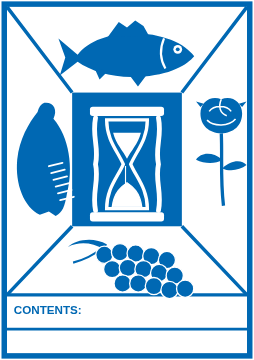
Perishable cargo (PER)
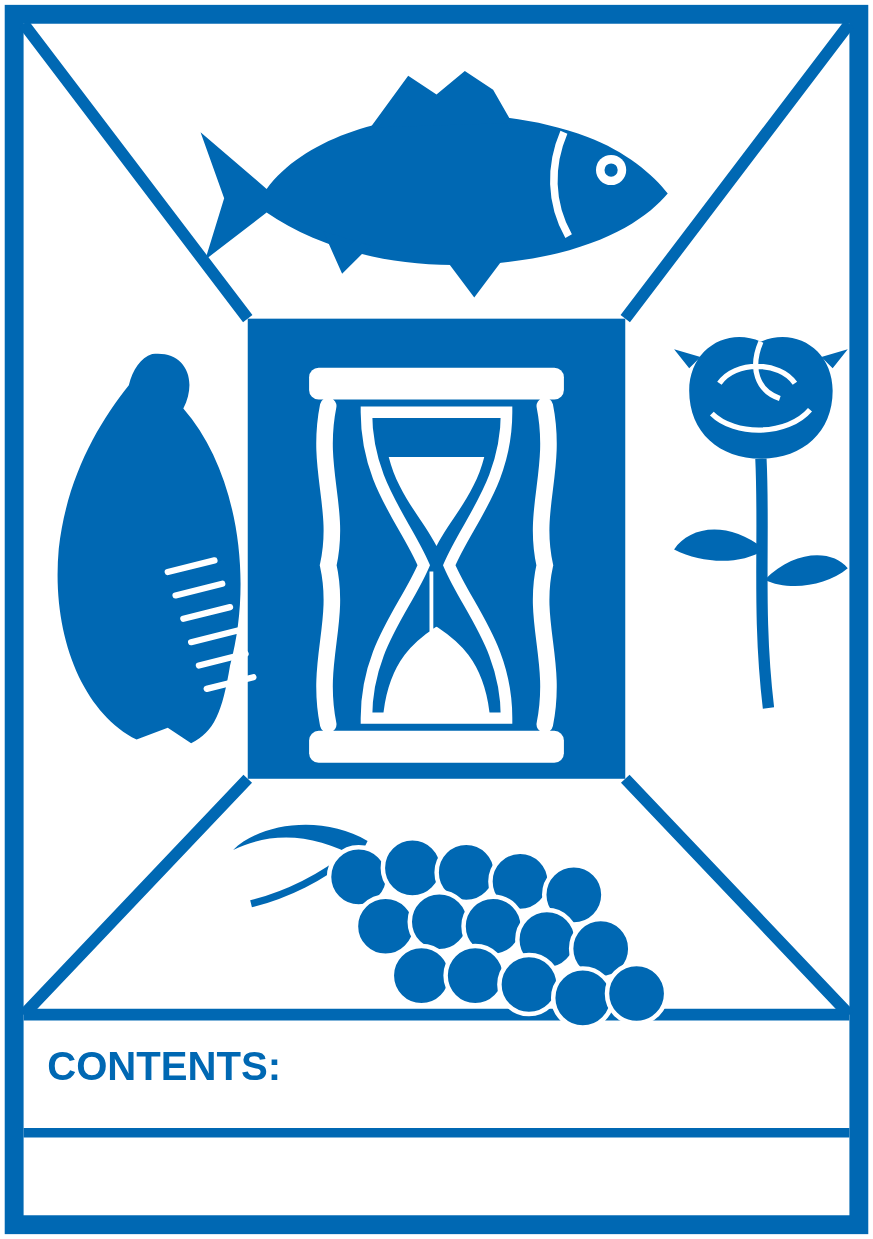
Perishable cargo (PER) Min. 74 × 105 mm IATA perishable label for fruit, vegetables, flowers, meat, seafood and other perishables. Write the contents.
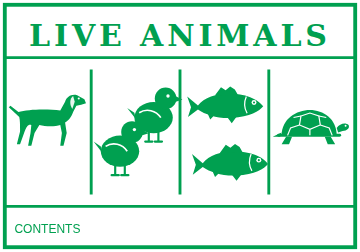
Live animals
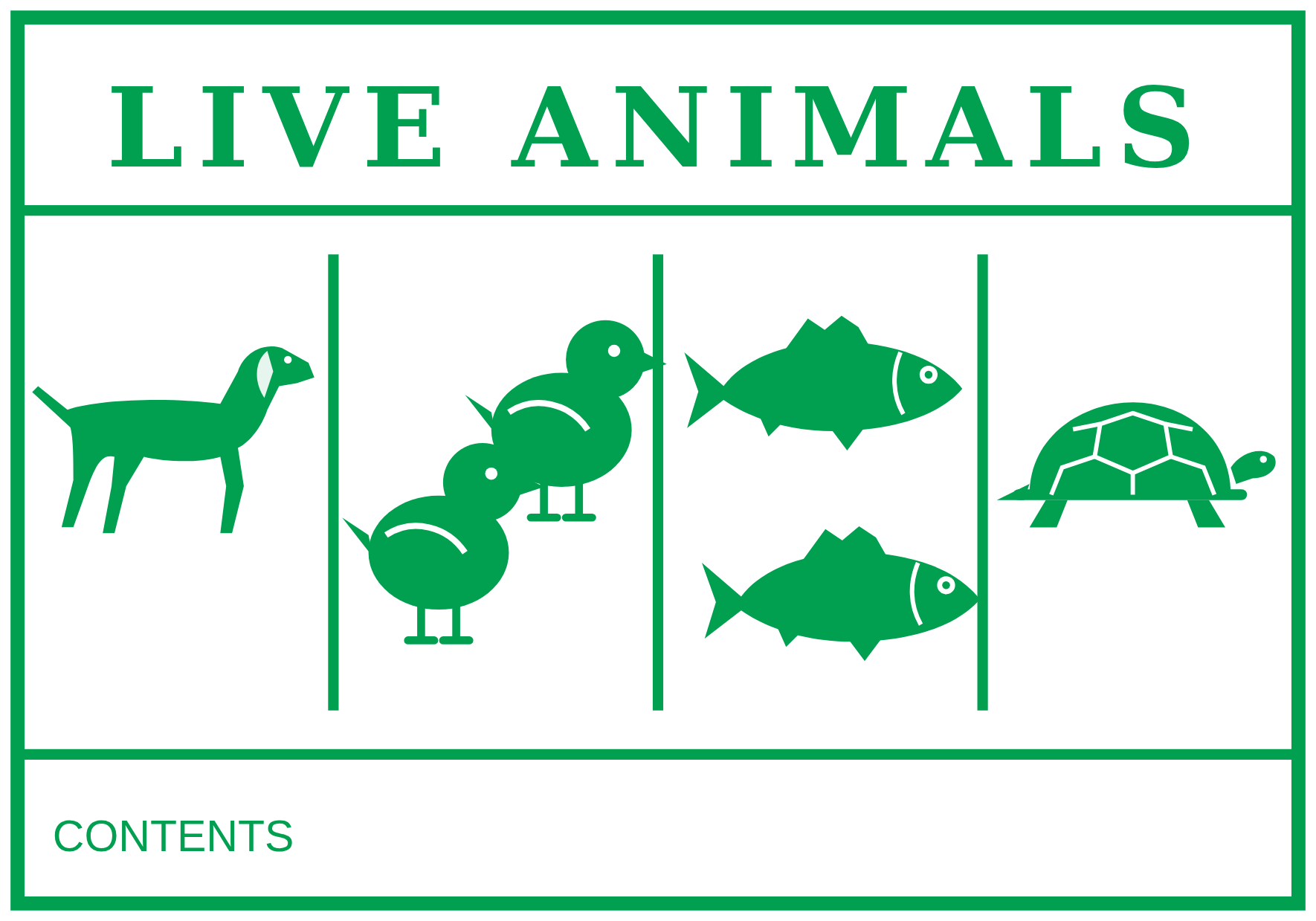
Live animals Suggested 150 × 105 mm For live animal consignments under the IATA Live Animals Regulations. Write the species and number. Use with "This way up" labels.
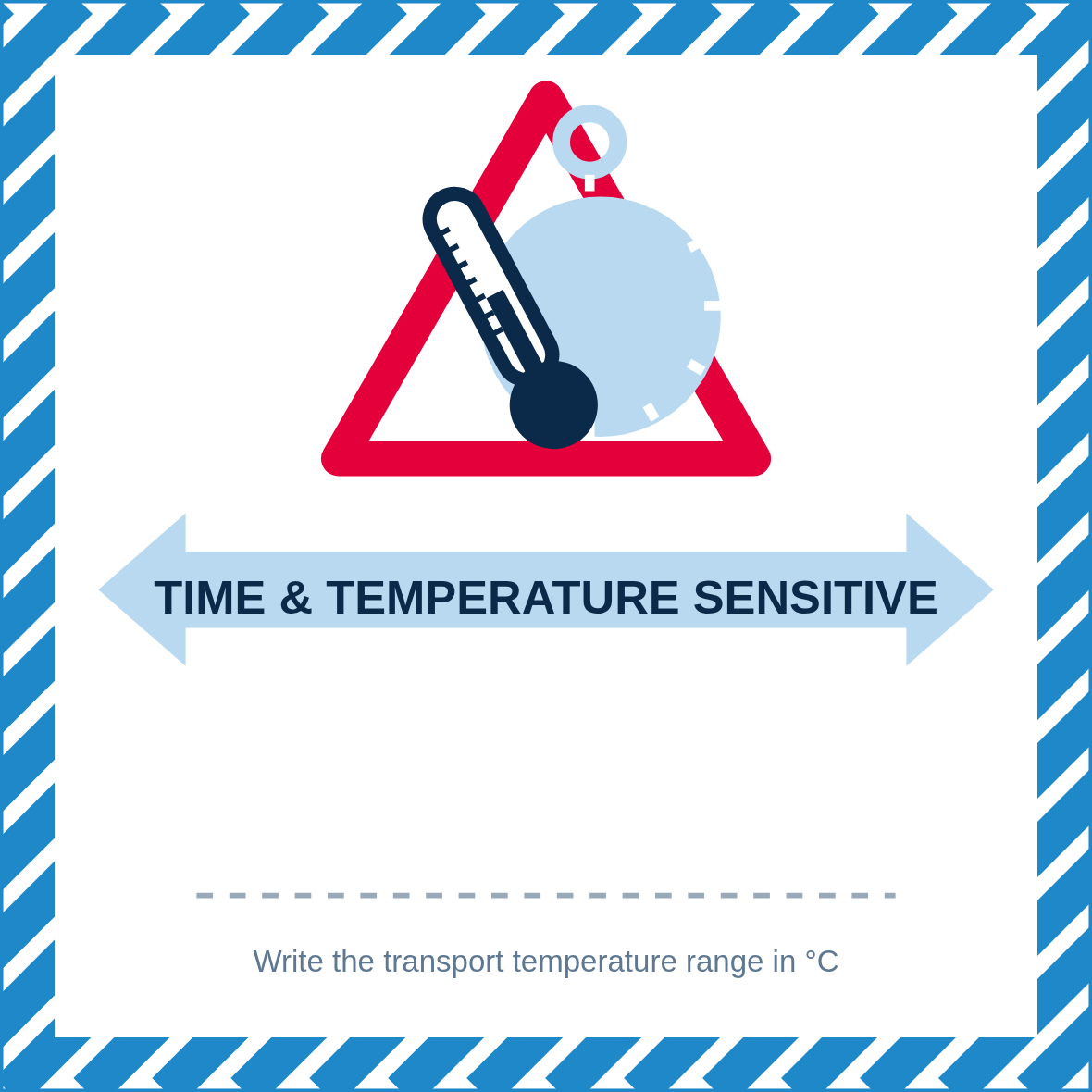
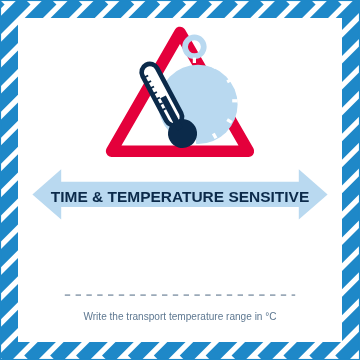
Time & Temperature Sensitive – blank
Time & Temperature Sensitive – blank Suggested 100 × 100 mm Mandatory for healthcare shipments booked as temperature-controlled. The lower half must show the external transport temperature range in °C, never left blank.
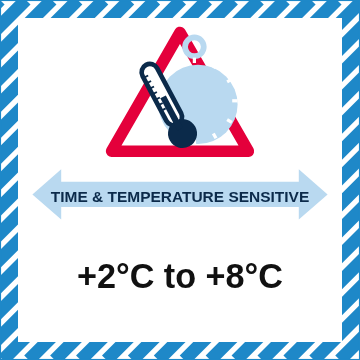
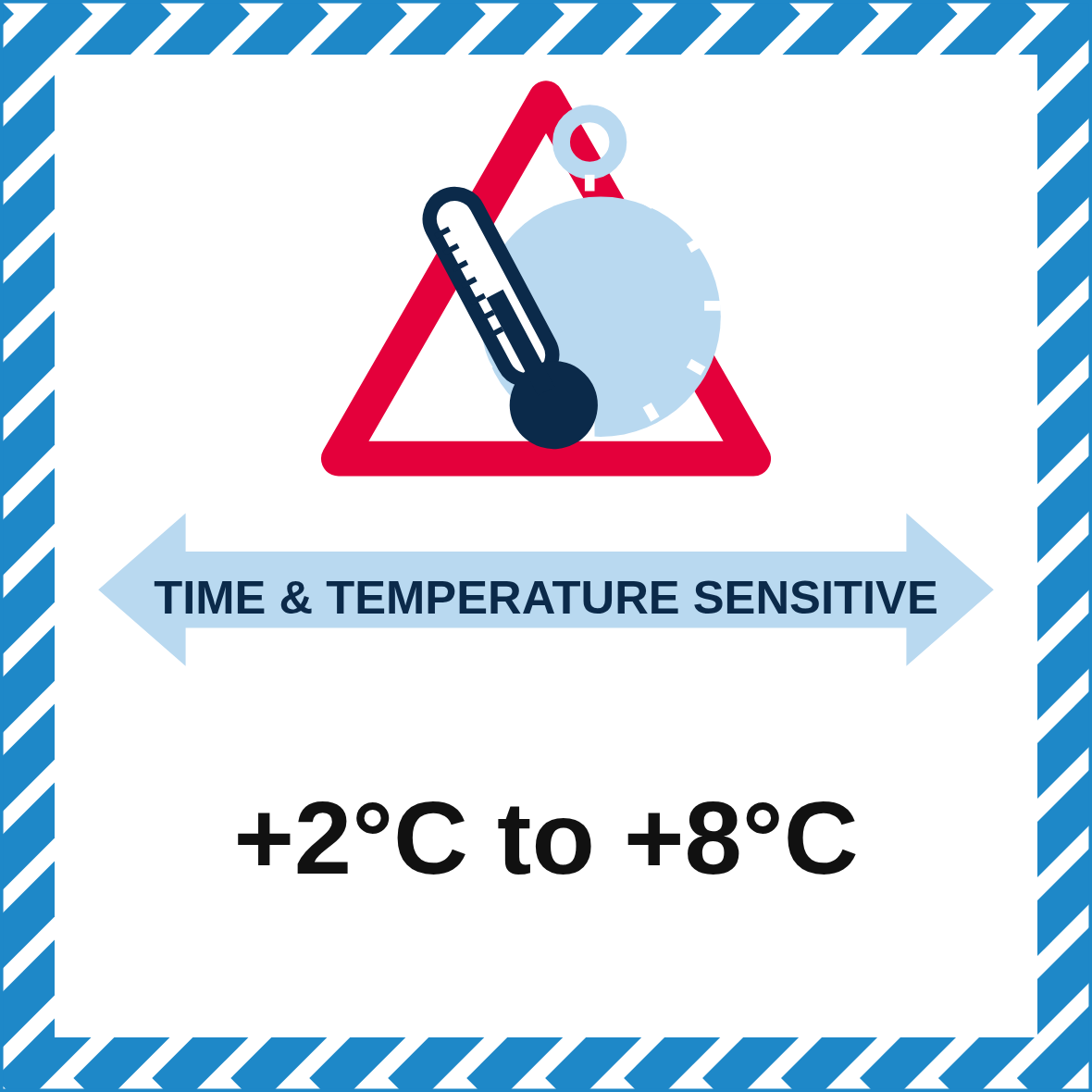
Time & Temperature Sensitive – +2°C to +8°C
Time & Temperature Sensitive – +2°C to +8°C Suggested 100 × 100 mm Refrigerated medicines and vaccines.
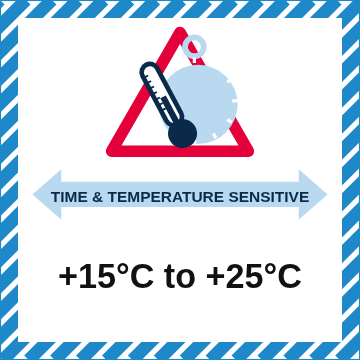
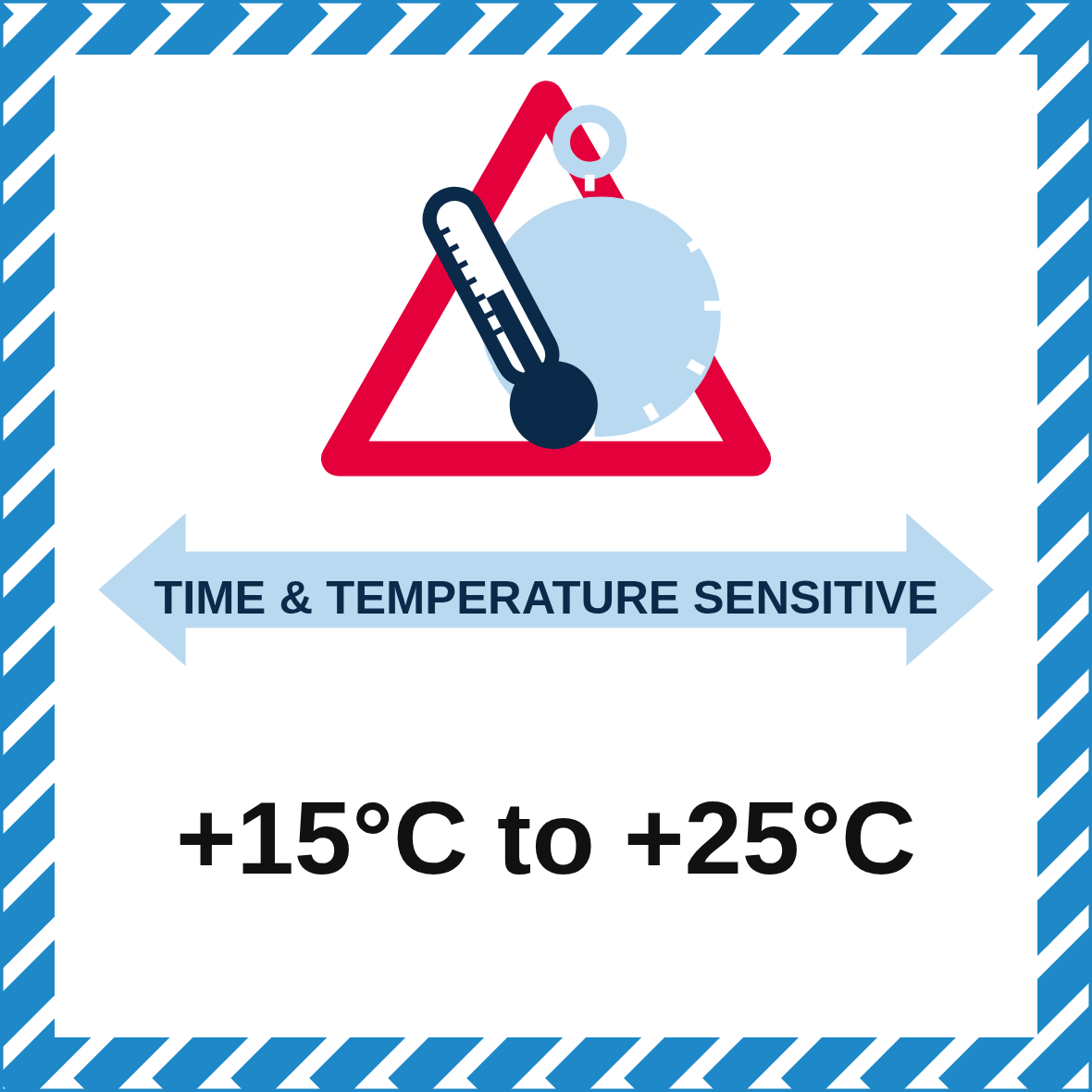
Time & Temperature Sensitive – +15°C to +25°C
Time & Temperature Sensitive – +15°C to +25°C Suggested 100 × 100 mm Controlled room temperature products.
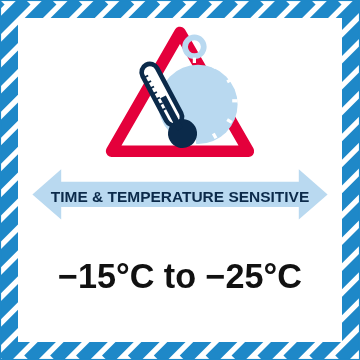
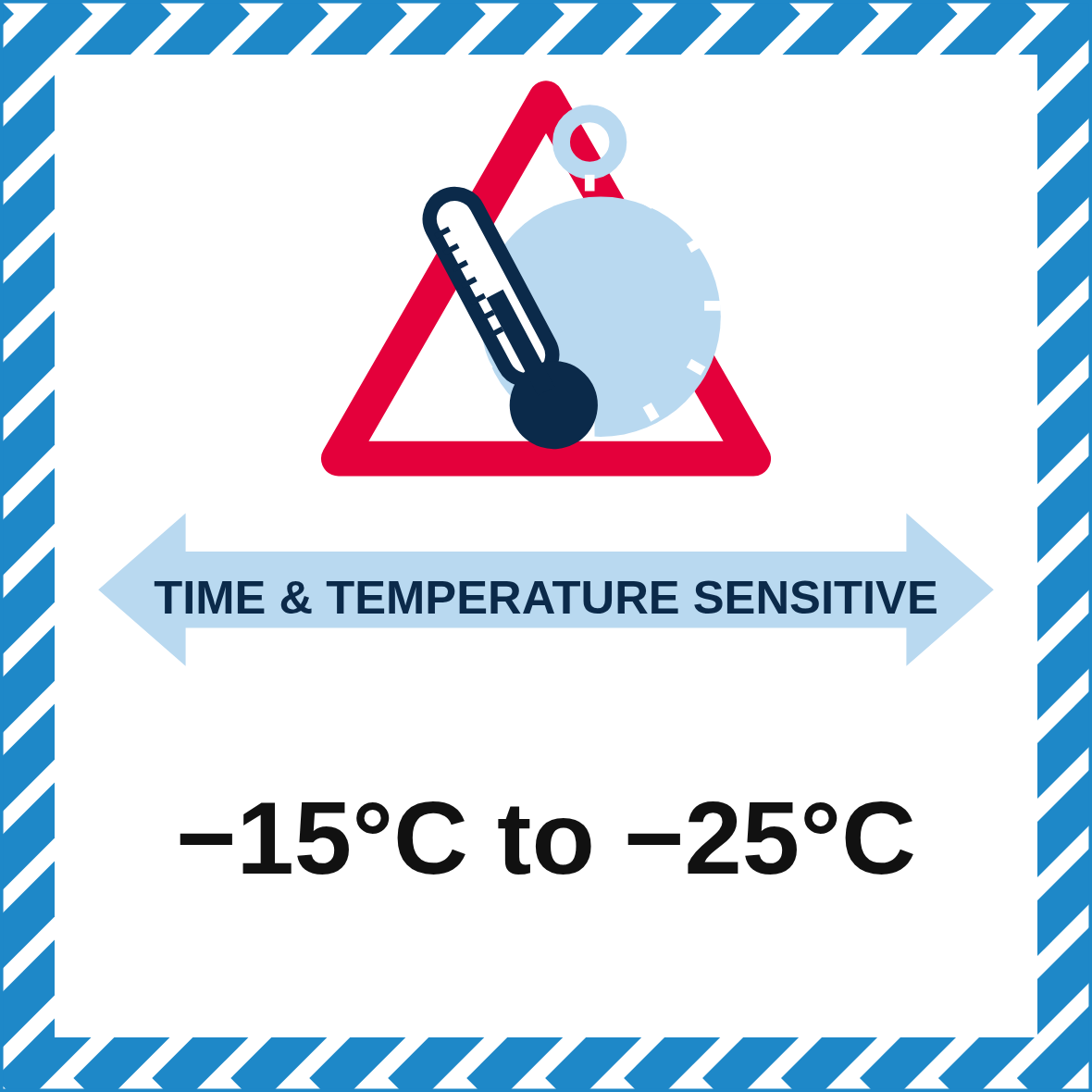
Time & Temperature Sensitive – −15°C to −25°C
Time & Temperature Sensitive – −15°C to −25°C Suggested 100 × 100 mm Frozen products.
MARKS · 7

Package marks

Marks for excepted and limited quantities, environmental hazards, biological samples, overpacks and dry ice.
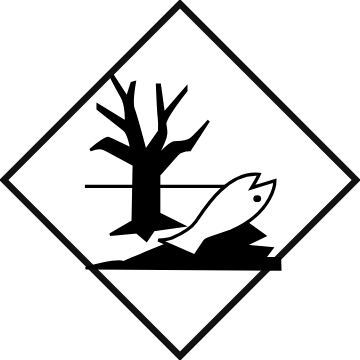
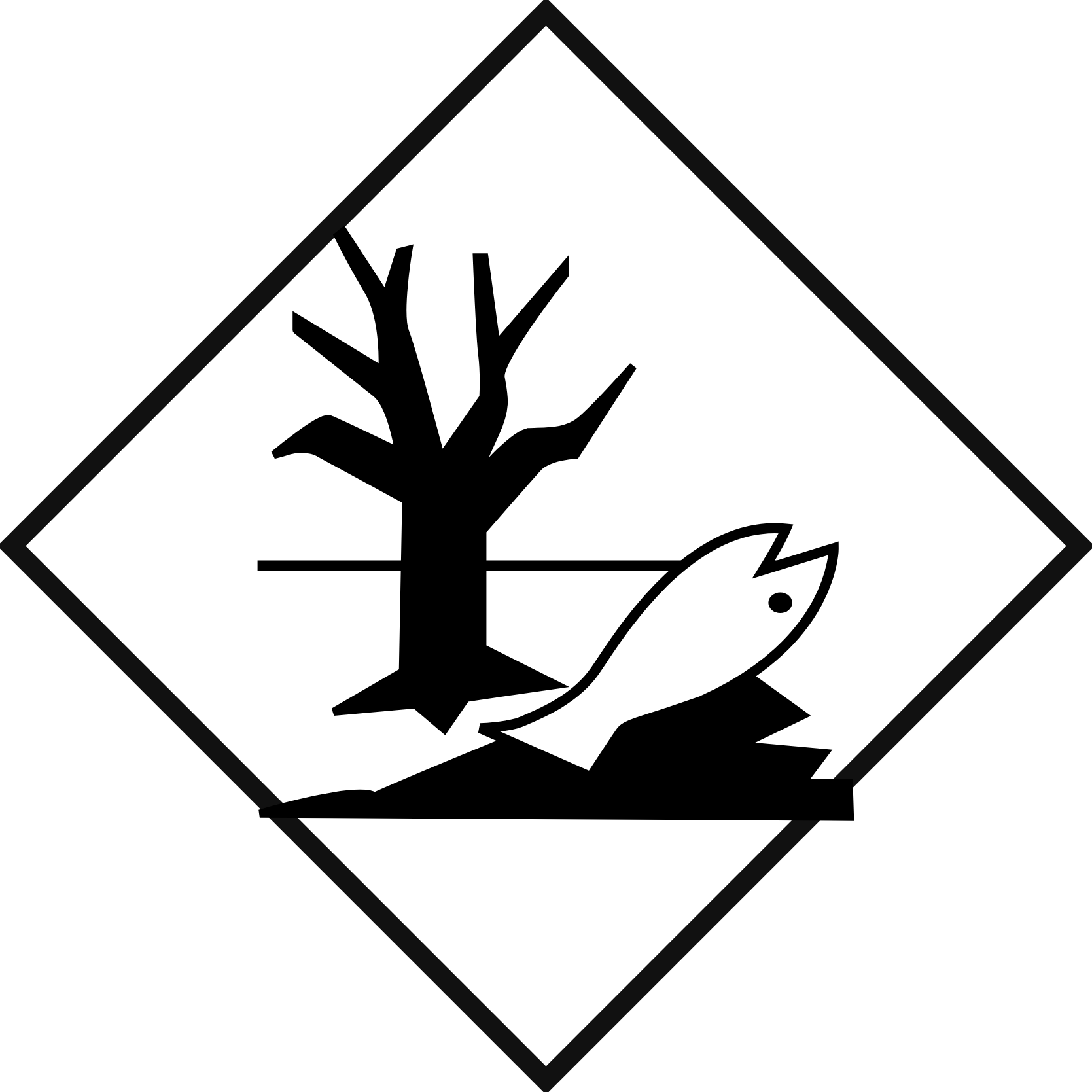
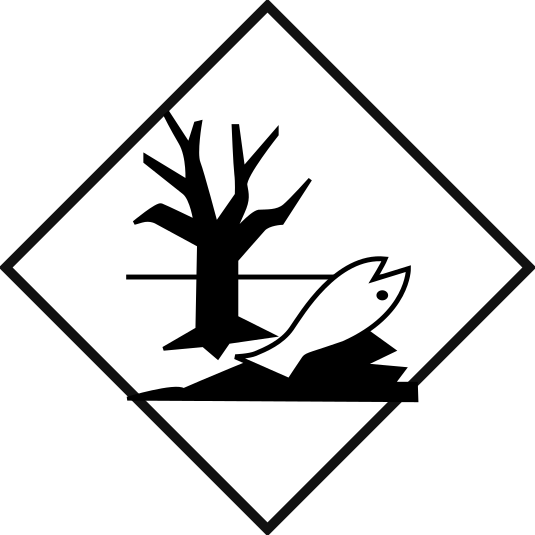
Environmentally hazardous substance mark
Environmentally hazardous substance mark Min. 100 × 100 mm (square set at 45°) For UN3077 and UN3082 and other substances that pollute the environment.
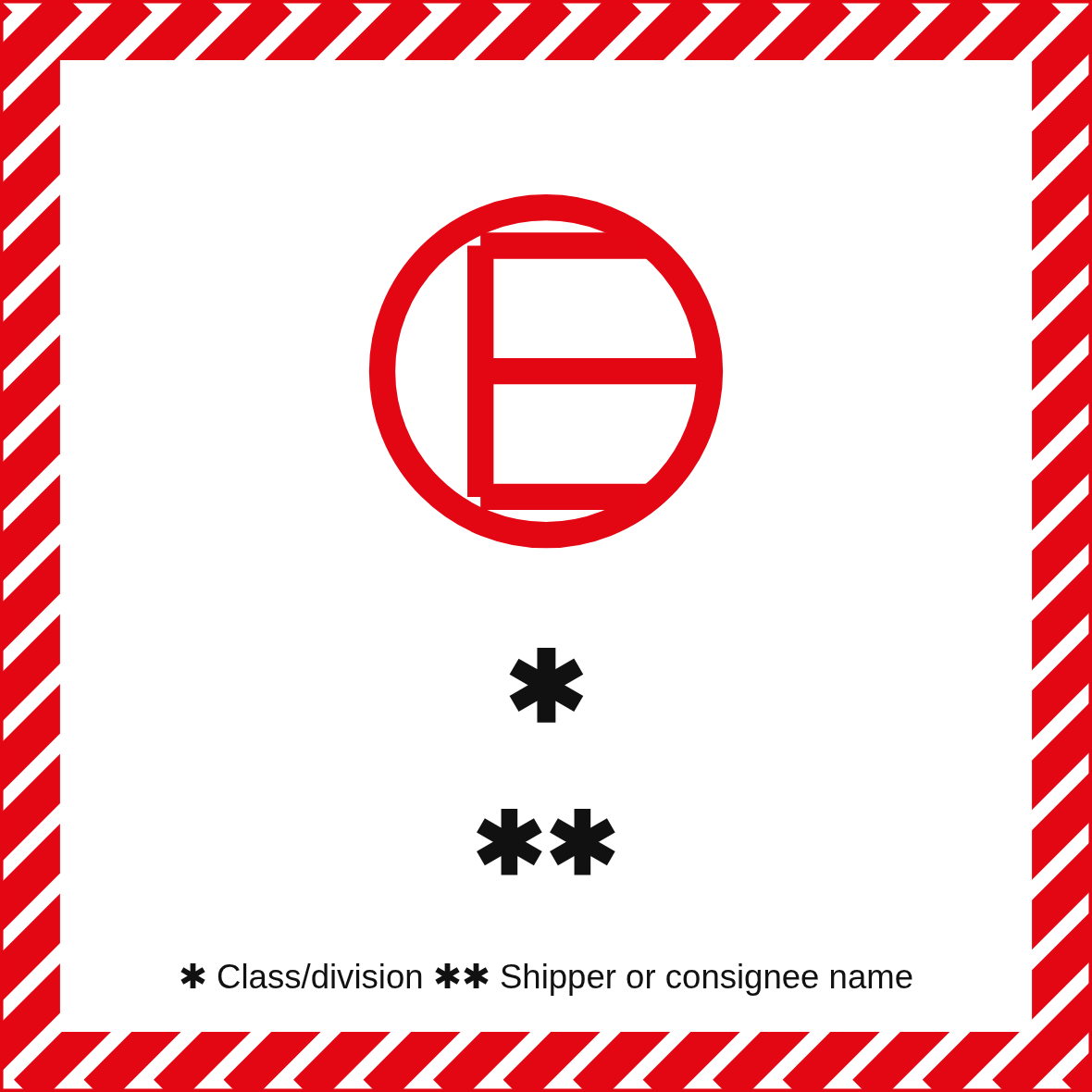
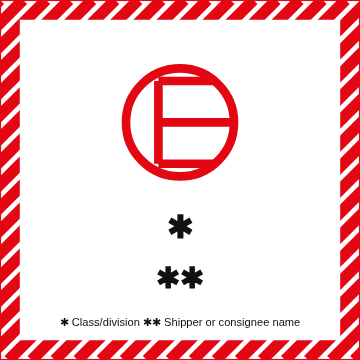
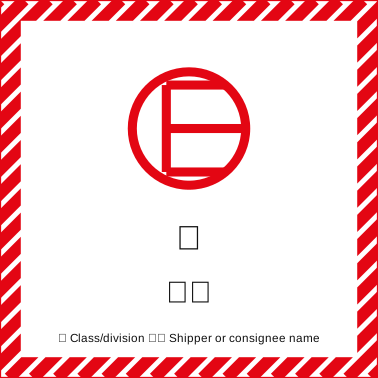
Excepted quantities mark
Excepted quantities mark Min. 100 × 100 mm For dangerous goods in excepted quantities (E1–E5). Write the class or division and, if not shown elsewhere, the shipper or consignee name.
Limited quantity mark – air (Y)
Limited quantity mark – air (Y) Min. 100 × 100 mm (50 × 50 mm on small packages) For limited quantities packed to a "Y" packing instruction for air.
Limited quantity mark – road / sea
Limited quantity mark – road / sea Min. 100 × 100 mm (50 × 50 mm on small packages) Also accepted by air when the package meets the air limited-quantity rules.
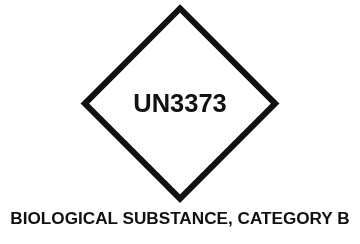
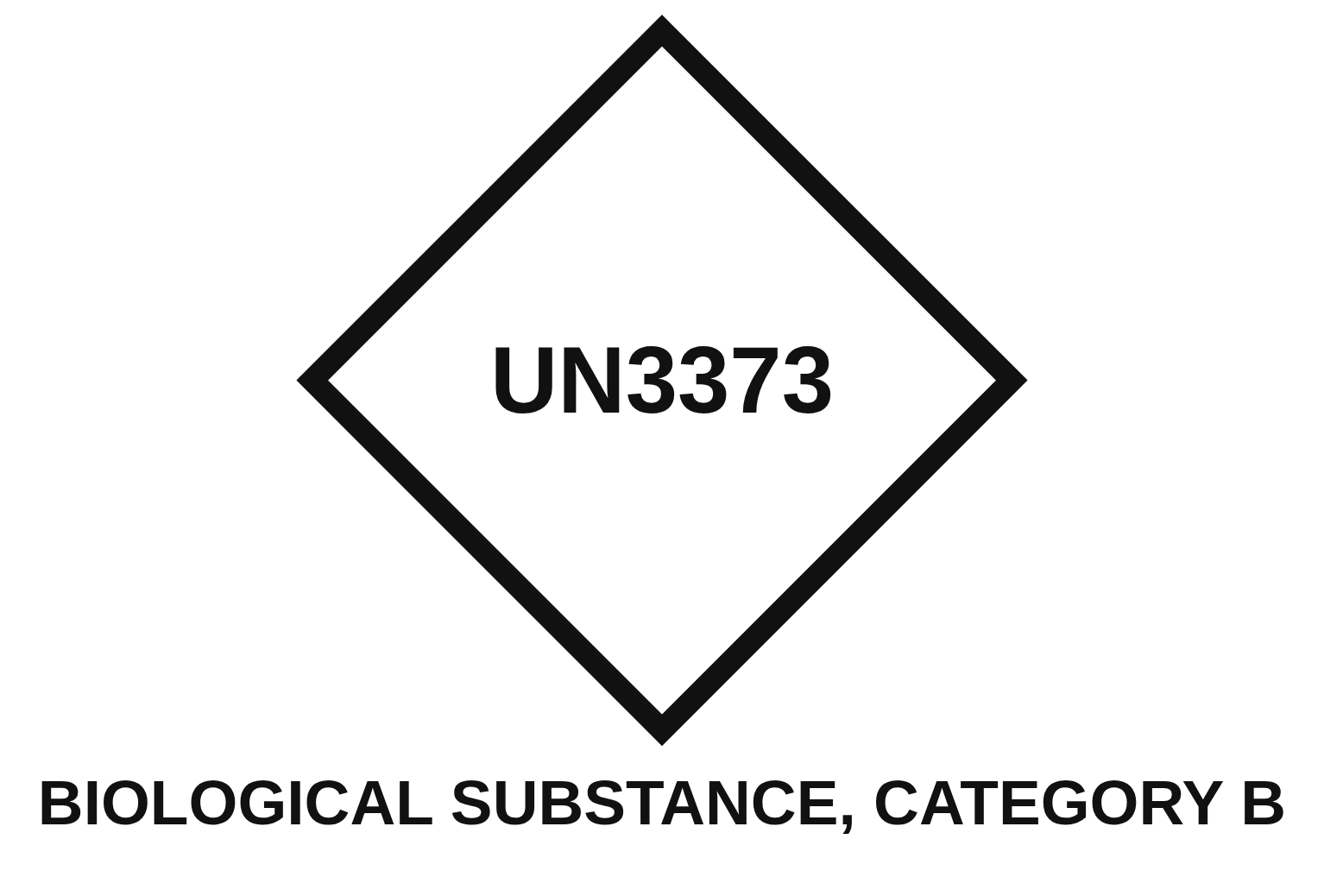
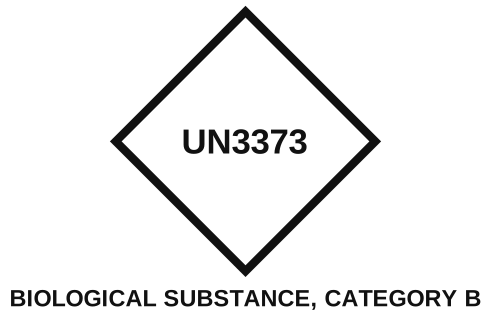
UN3373 – Biological substance, Category B
UN3373 – Biological substance, Category B Diamond min. 50 × 50 mm; text min. 6 mm high For diagnostic and clinical specimens. Show the text next to the diamond.
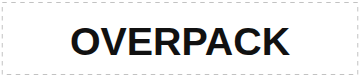
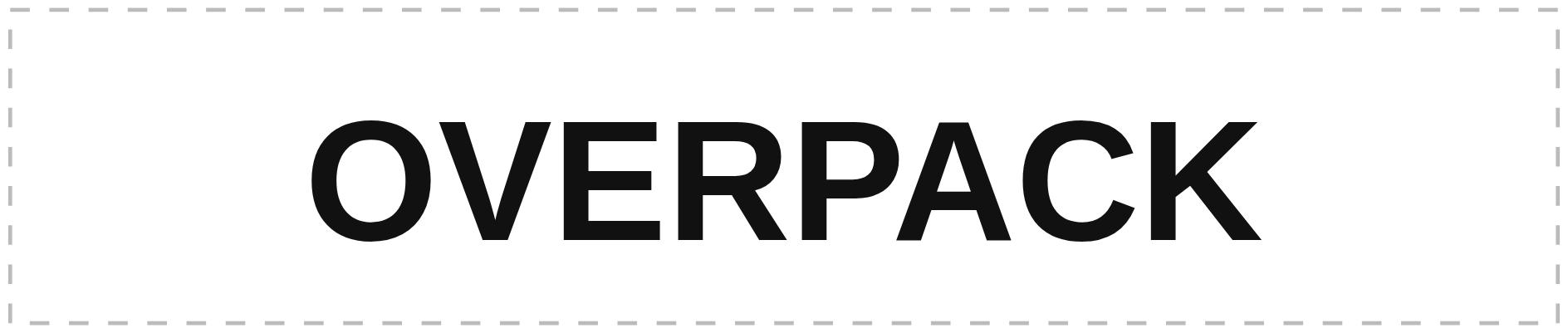
Overpack marking
Overpack marking Letters min. 12 mm high When package labels and marks are not visible from outside the overpack. Repeat the labels and UN numbers on the overpack too.
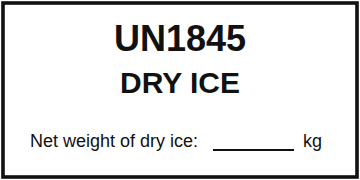
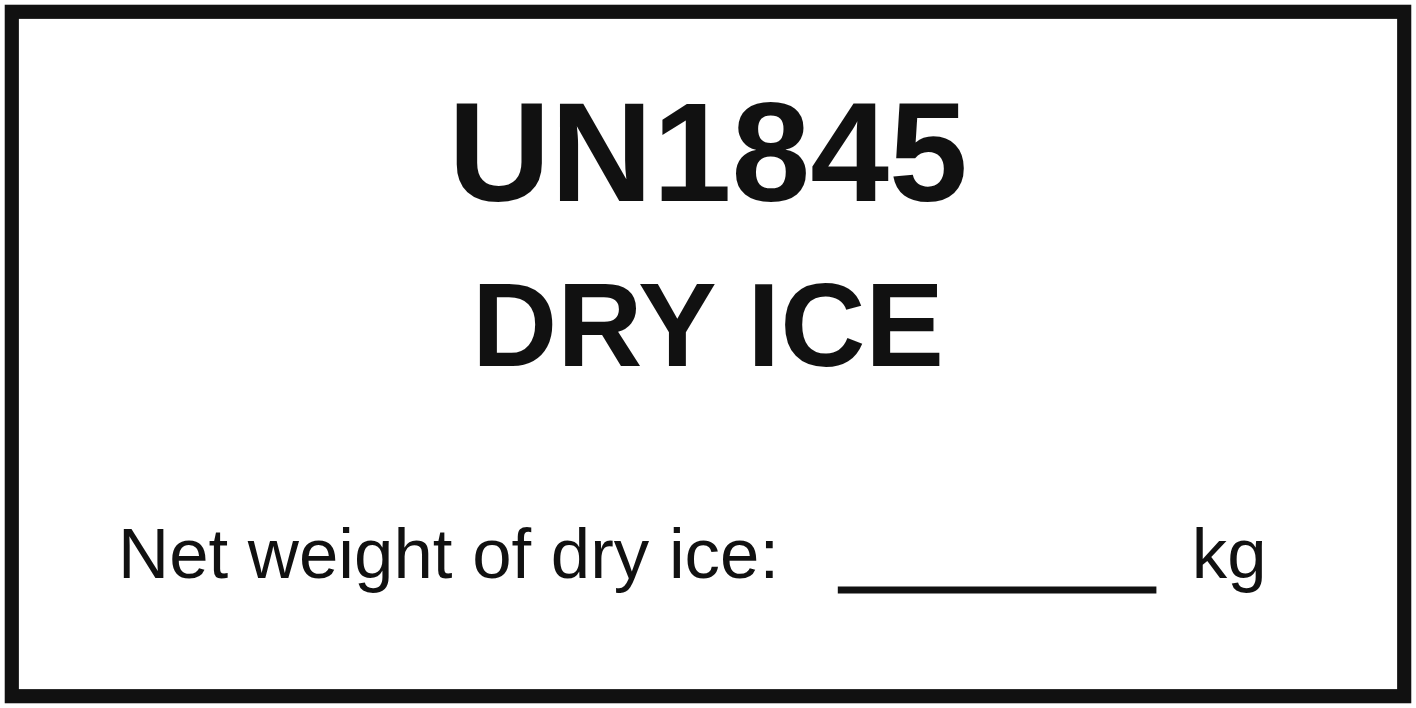
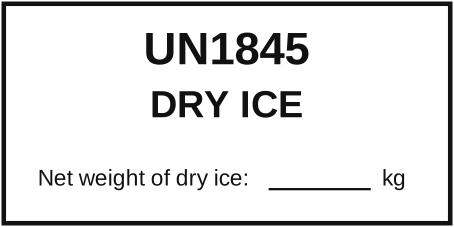
Dry ice marking – UN1845
Dry ice marking – UN1845 Suggested 120 × 60 mm Use with the Class 9 label. Write the net weight of dry ice in kg.
HOW TO PRINT

Right size, first time.
1 Pick the PDF Each PDF is an A4 sheet with one label at its exact regulation size.

2 Print at 100% In the print dialog choose “Actual size” or 100% scale, never “Fit to page”.
3 Measure once Check the printed label against the minimum size on the card, e.g. 100 × 100 mm for the battery mark.
4 Fill in and stick Write in UN numbers or names where shown. Use durable, weather-resistant label stock for real shipments.
Please note. This artwork follows the label figures in the UN Model Regulations and the ICAO Technical Instructions, which the IATA Dangerous Goods Regulations (DGR) use. It is provided free for convenience and is not an official IATA product. Always check labels against the current DGR edition and any state or operator variations. The shipper is responsible for correct classification, packing, marking and labelling.

Label questions

Which labels does a mobile phone shipment need?+

Most phone exports ship as UN3481, lithium-ion batteries contained in equipment, under Section II of Packing Instruction 967. These need the battery mark showing UN3481. Fully regulated (Section I) shipments need the Class 9 lithium battery label instead, and may need Cargo Aircraft Only. Our team confirms this for every shipment.

Why is there no phone number on the battery mark?+

The battery mark no longer needs a telephone number. From 1 January 2027 the mark may not show one, so all our versions use the current design without it.

Can I print these on a normal office printer?+

Yes, for one-off or sample shipments. For regular shipping, print the PNG or SVG on durable self-adhesive label stock with a thermal or colour label printer. Colours must match the label design, and labels must stay legible for the whole journey.

Are these official IATA labels?+

No. They are free artwork drawn to the figures in the UN Model Regulations and ICAO Technical Instructions, which the IATA DGR also uses. Labels do not have to be bought from IATA, but they must match the regulation figures in shape, colour, symbols and minimum size.

Where do the labels go on the package?+

On the same side as the proper shipping name and UN number, next to the shipper or consignee address where possible. Do not fold labels over edges. Package orientation labels go on two opposite sides.

Not sure which labels? Ask our DG desk.

Ship dangerous goods → WhatsApp a broker